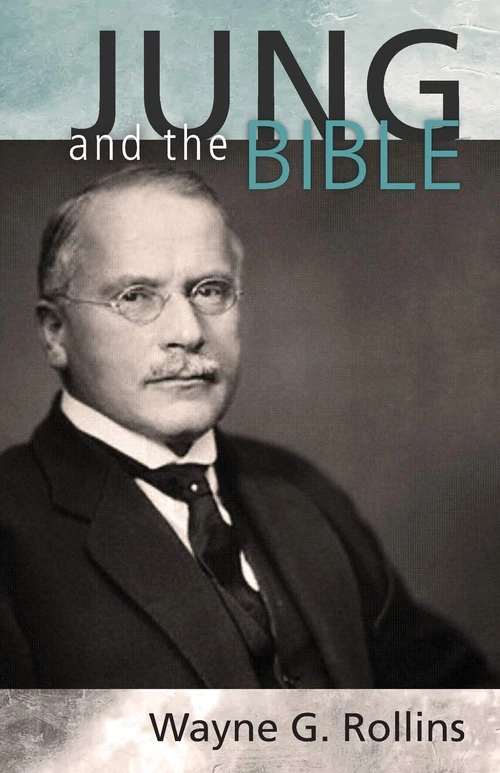
Jung and the Bible
- Biblical Studies & Commentaries
- Publisher: Wipf and Stock
- Published: 2013
FritzSearch.com earns a commission on purchases made through Bookshop.org links.
Publisher's Description
Out of the life and thought of a noted psychologist, Carl Jung, comes a captivating approach to reading and interpreting the Bible. The book opens with the question, "Why is it that the images, characters, and stories of Scripture have the power to catalyze the imagination of the human psyche, not only among religious people, but also among artists, moviemakers, playwrights, and songwriters, some of whom are disenchanted with church, clergy, and established religion?" The answer to the question begins with Jung's statement that the Bible is an "utterance of the soul." Jung sees the Bible as a treasury of the soul (psyche), that is, the testimony of our spiritual ancestors proclaiming in history and law, prophecy and psalm, gospel and epistle, genealogy and apocalypse, their experience of the holy, and drawing us and others through us into that experience. The Bible is no stranger to Carl Jung. No document is cited by Jung more often, and no cast of characters from any tradition is summoned to the stage of Jung's discourse with greater regularity than are the Adams and Abrahams, the Melchizedeks and Moseses, the Peters and Pauls of Judaeo-Christian Scripture--185 biblical figures in all. Beyond that, the realities and experiences that concern Jung most are also those that occupy prime attention in the writings of biblical authors: a sense of soul, of personal destiny and call; an openness to the wisdom of dreams, revelations, and visions; the power of symbols and archetypal images; the riddle of evil within God's world; and above all, the sense of God--the numinous, the Holy, at the center of things.
Endorsements (2)
“I'm venturing a course this fall under the banner of 'Freud, James, Jung as Pastoral Theologians, ' in which all the reading will be in primary sources from one of the big three, except for your gem, Jung and the Bible. I just don't know any better way for people to come to know Jung intimately. It is such a lucid and penetrating account; it makes Jung accessible without losing any of his power. In fact it shows him powerfully at work . . .”
“What a shame that I'm the first to write a review for this excellent 1983 book . . . . I suppose that had I still been teaching I would have selected Rollins' book as a text, given its focus on the Bible, but I don't think there would have been a better one. Next to Fordham's old book, this is the clearest exposition of Jung's positions that I've seen . . .”
See something wrong on this page? Report a problem