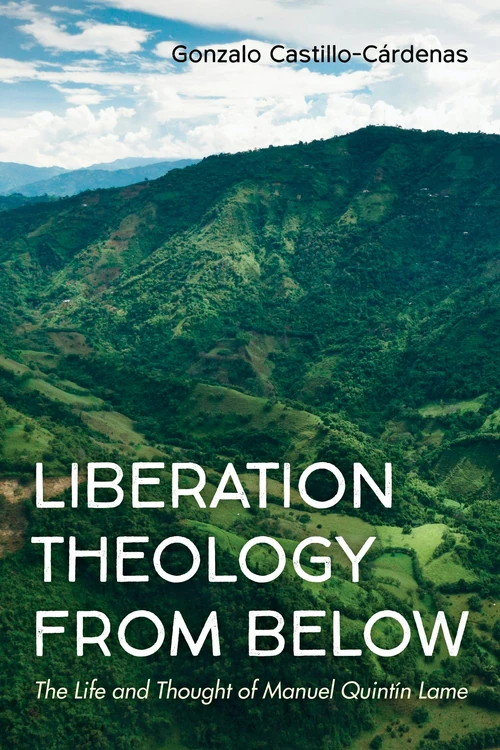
Liberation Theology from Below
The Life and Thought of Manuel Quintín Lame
- Theology
- Publisher: Wipf and Stock
- Published: 2024
FritzSearch.com earns a commission on purchases made through Bookshop.org links.
Publisher's Description
"Here sleeps the Indian Manuel Quintin Lame Chantre, October 7, 1967. He was a man who did not bow his head before injustice." In the Colombian Andes, Indians wrote that epitaph on the cross above Lame's grave because he led them in a just struggle against "civilization": against the "whites" and their system that has oppressed and dehumanized the Indians. The first part of this book is a thorough introduction to Lame's life, his thought, and his historical context: the world of the Indians of the Colombian Andes. The second part of the book contains "Los Pensamientos," a work written by Lame about a series of theological themes: nature, injustice, God, rebellion, oppression, hope, liberation . . . Gustavo Gutierrez has written: "One day a theology should develop that comes from the poor themselves. Liberation theology is just one step along the way in this search. I see it as a kind of theological crutch, to be used until the poor create a theology of their own experience, their own world." Lame's work answers Gutierrez's call. It is a theology that "comes from the poor themselves," and in its originality, boldness, and propheticism, Lame's theology surpasses that written by those with ties to the unjust "civilization" that Lame spent much of his life combating.
Endorsements (2)
“Within this book Manuel Quintín Lame, the persecuted leader of oppressed Indians in Colombia, emerges as a fascinating and disturbing forerunner of contemporary liberation theologians. The career of Lame requires us to reassess the issues of syncretism, of the relation between suffering and insight, of the role of passion and intellect in the religious life. Readers will discover similarities between Lame and the English Winstanley or the Korean Minjung theologians, yet will recognize in Lame an utterly unique figure.”
“Repressed, persecuted, denied, co-opted, and officially forgotten, some of these ancient liberation theologies are now resurrected by/within the new liberation theologies, which, in turn, find a nurturing sense of historical, communal rootedness in the former. Such is the case of Quintín Lame's liberation theology that comes back to life here.”
See something wrong on this page? Report a problem