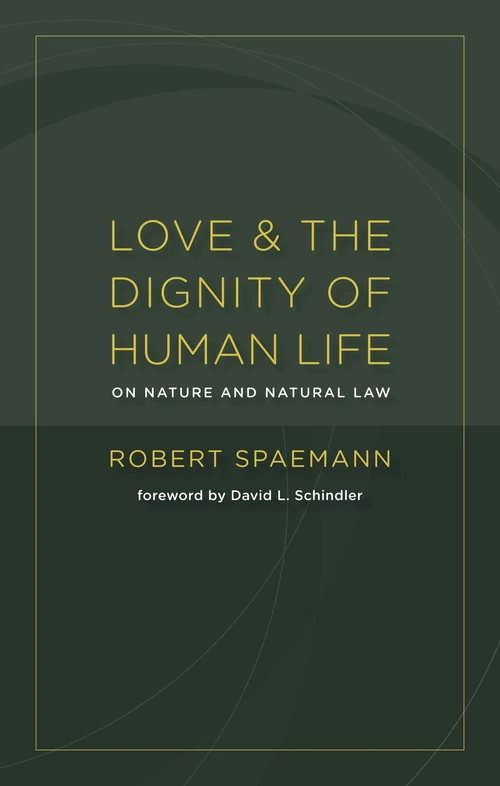
Love and the Dignity of Human Life
On Nature and Natural Law
- Philosophy
- Publisher: Eerdmans
- Published: 2012
FritzSearch.com earns a commission on purchases made through Bookshop.org links.
Publisher's Description
What does it mean to love someone? What does the concept of human dignity mean, and what are its consequences? What marks the end of a person's life? Is personhood more than consciousness? These perplexing questions lurk beneath the surface of everyday life, surfacing only to demand urgent attention in crises. Renowned German philosopher Robert Spaemann addresses these and other foundational enigmas in three eloquent short essays. Speaking wisdom to controversy, he offers carefully considered, novel approaches to key philosophical and theological questions about the nature of human love ("The Paradoxes of Love"), dignity ("Human Dignity and Human Nature"), and death ("Is Brain Death the Death of a Human Person?").
Endorsements (3)
“These three essays by Robert Spaemann will make an excellent first encounter (it is unlikely to be the last) for readers who do not yet know the probing and delicate thought of this distinguished German Catholic moral philosopher, equally at home in the traditional themes of Western Christian philosophy and in the technicalities of contemporary problems posed by technology. Two chapters that distill lines of thought from Spaemann's major works, Happiness and Benevolence and Persons, lead to a memorably stinging critique of brain-death criteria in transplant surgery. This is Christian thoughtfulness at its most engaging.”
“Robert Spaemann is one of the leading contemporary German philosophers. In many groundbreaking works he has thought about what it means to be a person. Persons, he argues, 'have' their nature and are free; they are not simply their nature. This is why there is a special dignity of the person. This insight is extremely important but often forgotten. In these timely (and very accessible) essays, Spaemann reminds us about who a person is -- and how we can live humanly. Everyone who cares about the human person, not just the professional philosopher, will be grateful for this book!”
See something wrong on this page? Report a problem