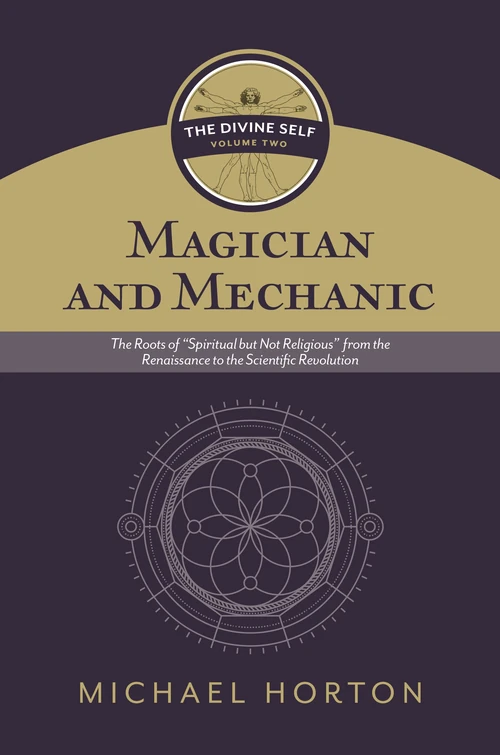
Magician and Mechanic (The Divine Self, vol. 2)
The Roots of “Spiritual but Not Religious” from the Renaissance to the Scientific Revolution
- History & Biography
- Publisher: Eerdmans
- Published: 2026
FritzSearch.com earns a commission on purchases made through Bookshop.org links.
Publisher's Description
A stunning history of “spiritual but not religious” thought in Western culture In this second volume of The Divine Self series, Michael Horton explores changing conceptions of the divine self during the historic period from the Renaissance to the Scientific Revolution—a tumultuous era of rethinking humanity’s relationship to God and nature. In Horton’s telling, this period is characterized not by steady diminishment of magic and orthodox religion and a corresponding rise of rational science, but rather by lively and productive interaction between these influences. Horton examines what is at stake for the divine self in this growing tension between magicians and Baconians, and what role each plays in the development of the modern self. He analyzes the work of renowned historical figures—Luther, Erasmus, Descartes, and Hobbes, to name a few—but also illuminates the activities of lesser-known individuals and groups that were profoundly influential in their time. From the gardens of Renaissance popes and dukes to Newton’s alchemical pursuits, life during this period is characterized by an intense search for the sacred and a desire for fullness—forces that lay the groundwork for the “spiritual but not religious” phenomenon as we know it today. Magician and Mechanic occupies an important place in a monumental three-volume study of the divine self. The first volume surveys antiquity through the late Middle Ages; the third volume (forthcoming) will span the eighteenth century through the present day. When the series is complete, The Divine Self will stand as the authoritative guide to the “spiritual but not religious” phenomenon in Western culture.
Endorsements (4)
“A marvelously engaging and eye-opening reassessment of the Western world’s transition to modernity. This second volume of Horton’s audacious trilogy on the ‘divine self’ assigns a leading role in this transitional process to spiritual enthusiasts and ancient philosophical and religious traditions—rather than to secularists—and in the process exposes the deeply theistic and mystical roots of dogmatic materialism and aggressive atheism. All in all, a stunning achievement.”
“Horton’s expertise in Reformed theology allows him to bring the fascinating world of early modern religious and intellectual history into clear and often surprising focus. In challenging conventional narratives of secularization, Horton offers a fresh, richly detailed perspective on the eclipse of traditional Christian faith in the West in a critical period of its development.”
“‘Spiritual but not religious’ may sound like a trendy idea, but Horton’s three-volume intellectual history is anything but trendy. While his work doesn’t fit into any neat categories, he ably navigates this topic by providing a stunning level of detail in history, philosophy, and cultural analysis, offering a perceptive assessment of what he has discovered as he examines the passing centuries. Horton’s treatment is informed, reasonable, and impressively documented. Since one is hard pressed to understand our own time without better understanding our past, theologians, cultural critics, public intellectuals, and others will find his remarkable study both relevant and fascinating.”
“Horton’s works can be summed up this way. Agree or disagree to your heart’s content, but ignore them? Do so at your own intellectual peril. Magician and Mechanic grabbed my attention initially thanks to the catchy title. Yet as I read on, it’s more than just a ‘shiny’ title. The substance and span of Horton’s argumentative thread is stunning. While one might not agree with all the constituent parts of his narrative arc, and while one might not even end up agreeing with his conclusion, one can unequivocally say Horton sets readers on an arduous yet fruitful foraging walk through the thick and oft-intimidating forest of medieval and early modern intellectual histories of the West. Come and enter the enchanted forest. You will not leave the same!”
See something wrong on this page? Report a problem