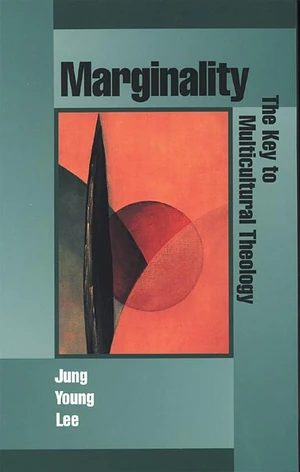
Marginality
The Key to Multicultural Theology
- Theology
- Publisher: Fortress Press (Augsburg Fortress)
- Published: 1995
FritzSearch.com earns a commission on purchases made through Bookshop.org links.
Publisher's Description
"To transcend or to live in-beyond does not mean to be free of the two different worlds in which one exists but to live in both of them without being bound by either of them." — Jung Young Lee In this work Jung Young Lee proposes a framework that justifies and undergirds development of contextual theologies without becoming itself dominating. Lee aims to address the dilemmas of contextual theology not by moving one or another group from the margin to the center, but by redefining marginality itself as central. Marginality, he contends, is not only the experience of being outside the dominant group or in-between groups, but also "in-beyond"—a holistic, process-oriented definition that highlights the catalytic, transformative potential of living at the creative nexus of worlds. Lee's insight into marginality leads him directly into a new model for contextual theologies that focuses not on historical experience but on creative potential. His chapters work out concretely what such a notion can mean culturally, methodologically, and doctrinally to a movement that professes to follow the very paradigm of creative marginality, Jesus Christ.
Endorsements (2)
“Maraginality is a book that every Christian concerned about the meaning of the gospel today ought to ponder. In particular, for those of us who belong to the 'mainline' denominations, the book forces us to face the question: In a world in which so many are marginalized, can a church call itself both "mainline' and 'Christian'?”
“Marginality: The Key to Multicultural Theology is a major contribution to the literature of theology emerging out of the experiences of minority communities in the U.S. Although written from the perspective of an Asian American, others will find it challenging and insightful.”
See something wrong on this page? Report a problem