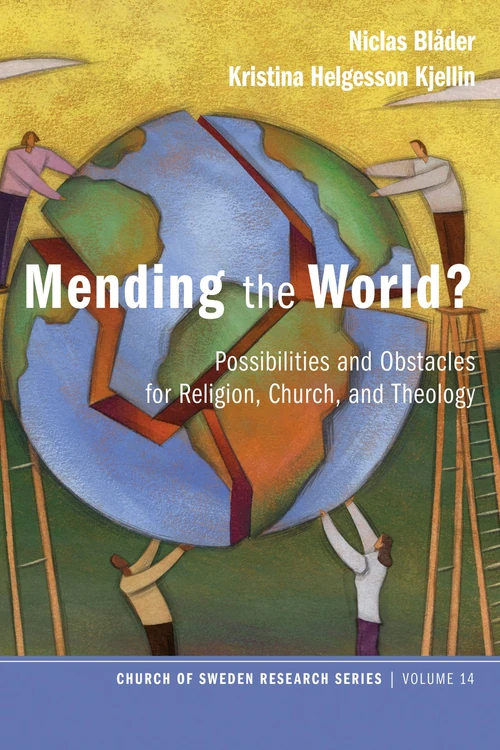
Mending the World?
Possibilities and Obstacles for Religion, Church, and Theology
- Ethics, Culture & Social Issues
- Publisher: Pickwick Publications (Wipf and Stock)
- Published: 2017
FritzSearch.com earns a commission on purchases made through Bookshop.org links.
Publisher's Description
Religion has played a major role in history, affecting the course of events and influencing individuals. Today one frequently hears the expression "the return of religion" but opinions differ as to how this "return" is to be understood. It is clear that modernity and postmodernity have not meant that religion is dead or relegated to society's backyards. Religion is still of vital importance for many people. It has, to some extent, changed shape but has not lost its legitimacy and attractiveness to broad groups. Religion is public, visible, and has a sought-for voice; but it is also wrestling with extremism, ignorance, and preconceptions. Just like ideologies, religions are capable of activating diametrically opposite traits in humans. It is this dual tension that is implicit in the question mark in this book's title: Mending the World? This book's aim is to help explore whether, how, and in what ways religion, church, and theology can contribute constructively to the future of a global society. In thirty-one chapters, researchers from around the world address the relation between religion and society.
Endorsements (2)
“Mending the World? offers a timely, honest, and meaningful conversation on the trials and promises of religious pluralism from a global perspective. Calling for a culture enriched by a transparent encounter with the other, this collection comes at a most opportune time for addressing the challenges posed by the growing entrenchment of religious, racial, and nationalistic ideologies. Now is the time this book needs to be read.”
“Mending the World? is a collection of various thought-provoking essays from scholars around the world researching and reflecting on the symbiotic relationship between religion and social transformation. The essays proceed from the premise of the socially-constructed nature of religious belief and practice, and the question mark at the end of the title is an invitation to consider the 'dual tension' inherent in the ways in which religion both conforms to and transforms communal norms. I highly recommend the book to those who are interested in studying both the regulatory and the transformative capacities of religious beliefs.”
See something wrong on this page? Report a problem