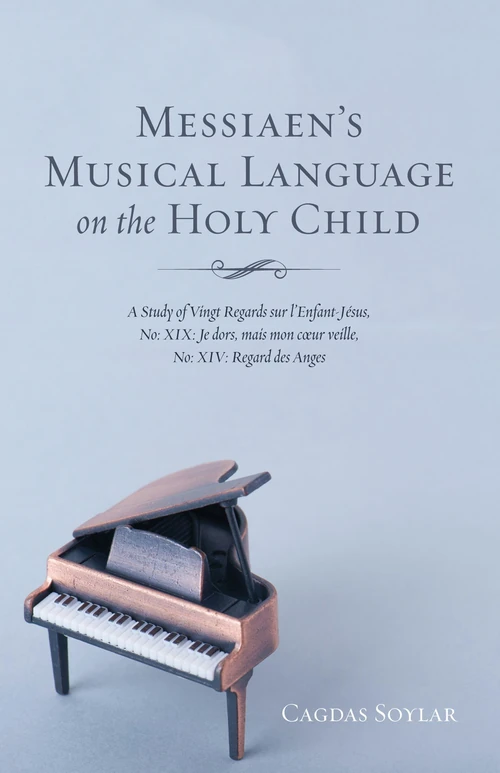
Messiaen’s Musical Language on the Holy Child
A Study of Vingt Regards sur l’Enfant-Jésus, No: XIX: Je dors, mais mon coeur veille, No: XIV: Regard des Anges
- Arts & Literature
- Publisher: Wipf and Stock
- Published: 2018
FritzSearch.com earns a commission on purchases made through Bookshop.org links.
Publisher's Description
Olivier Messiaen was a prominent twentieth-century French composer. His musical language includes highly complicated concepts derived from a variety of sources. Hindu rhythms, Greek rhythms, and bird calls influenced him deeply; his Catholic faith, however, had the greatest impact on his compositions. I provide a detailed analysis of two religiously motivated pieces from his Vingt Regards sur l'Enfant-Jesus (Twenty Gazes upon the Infant Jesus), one of the most remarkable solo piano works of the twentieth-century, to explore how he integrates the Christian theology into his musical language. Je dors, mais mon cœur veille (I sleep but my heart waketh) is a dialogue that represents Messiaen's mystic love of God, whereas Regard des Anges (Gaze of the Angels) is a celebration symbolizing the angels beholding the birth of Jesus Christ. I explain how the entirely different subjects of the two pieces are articulated in the change of pitch collections and rhythmic structures, as well as how the changes of musical language through the use of the different pitch collections generate the formal structure that is related to the biblical source.
Endorsements (1)
“Cagdas Soylar's study represents a valuable contribution to modern Messiaen research. It will benefit anyone wishing to explore in detail Messiaen's style, musical vocabulary, and deep spirituality. Through detailed and scholarly examination of two of his Vingt Regards sur l’Enfant-Jésus, Ms. Soylar unpacks Messiaen's faith integration worldview—i.e. ways in which his deep religious beliefs are portrayed in his music—and suggests implications for performance.”
See something wrong on this page? Report a problem