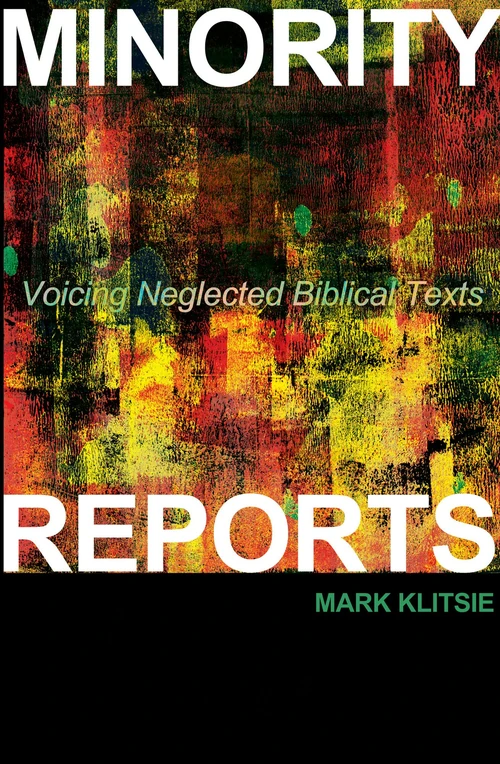
Minority Reports
Voicing Neglected Biblical Texts
- Theology
- Publisher: Wipf and Stock
- Published: 2016
FritzSearch.com earns a commission on purchases made through Bookshop.org links.
Publisher's Description
The stuff that comes after modernism isn't all bad. Postmodernism, not needing everything to be buttoned up, can leave things dangling; it can pay attention to the obscure, marginal, and particular. The postmodern dynamic invites one to revisit biblical texts that do not fit into tidy, cherished theological constructs: I call these texts the "minority reports." Popular theology infers that God is just pretending when he changes his mind or gets frustrated, saddened, and affected by humans--this understanding is guided by concepts of God's omni-attributes. But these wise and well-intentioned concepts fail to portray a God who will not be domesticated. Certain biblical narratives trace YHWH's hiddenness, suffering, changeability, and "hostility"--this awkward "shadow side" of YHWH is sometimes selectively overlooked. The fear of God is gone. Instead we have the ever-tolerant, universal God who is in danger of evaporating into "spirit," "light," and "love." As a theologian I use Hebrew block logic: competing truths in the Bible are kept intact; synthesis isn't necessarily sought. God chooses us and we choose God; God is self-sufficient, all-powerful, and all-knowing, needing no creature. Yet he chooses to limit his "omni-ness" in the human arena and makes himself vulnerable to humans. He hyphenates his name with Abraham, Isaac, Jacob--and the church--at a risk.
Endorsements (4)
“Mark Klitsie has written a bold probe into the nature and character of God in the Bible. In protest against the flattened 'omni-God' of much modern rational thought, he exposits a God with whom serious disputatious engagement is possible. Klitsie happily appeals to Jewish interpretation, most especially that of Abraham Heschel. The result is a God who is a match for the complexity and ambiguity of human life.”
“Klitsie invites his readers to wrestle, like Jacob of old, with a God who will not be contained. Klitsie welcomes engagement and disagreement, and surely many will disagree with some of his conclusions--yet it is in the crucible of disagreement that strong minds are forged. This much, however, is sure: Klitsie's devotion to a God worthy of respect, devotion, and worship shines forth from every page.”
“Klitsie rushes in where angels fear to tread, at least when it comes to arguing for a 'concrete, incarnational, and messy theology.' He invites us to reexamine the Bible and--in true postmodern manner--hunt down marginalized, neglected, unpopular Scriptures, including references to genuine divine pathos. Such an enterprise leads us to a genuine, synergistic relationship based upon divine kenosis. I highly commend this book for all who wish to see God again with fresh eyes.”
See something wrong on this page? Report a problem