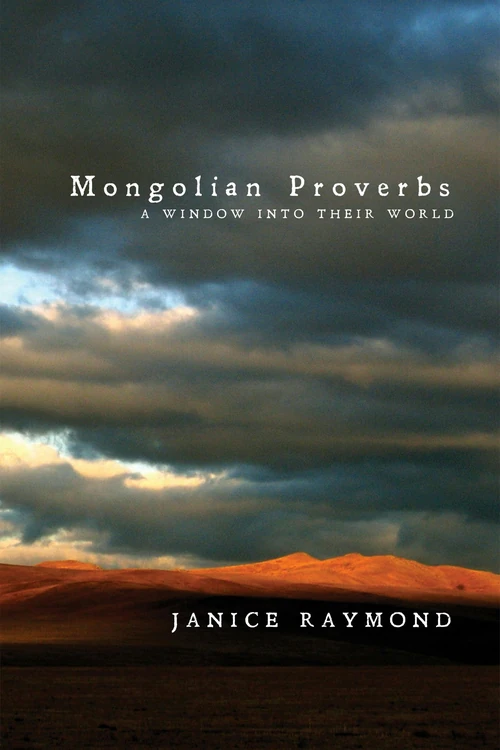
Mongolian Proverbs
A Window into Their World
- Publisher: Resource Publications (Wipf and Stock)
- Published: 2014
FritzSearch.com earns a commission on purchases made through Bookshop.org links.
Publisher's Description
Mongolian proverbs reveal important values, while at the same time concealing them. They show the honorable destiny that comes with a good name and the shameful future connected with a bad reputation, assuring a promising future for those who keep Mongolian traditions and customs alive. Unity is important for success, and yet is often elusive in practice. The activities of the unseen world form a major aspect of the Mongolian worldview. When that is understood, the wisdom in their proverbs can be seen from a richer perspective than straight translation reveals. This book sheds light on Mongolian proverbs' enduring wisdom by engaging foreigners in dialogue with native speakers to uncover how their proverbs are used and their intended meanings.
Endorsements (2)
“Although contextualization theory was introduced more than four decades ago, it remains a work in progress. Janice Raymond's work on Mongolian proverbs makes an important contribution to the study of contextualization as a process, using the study of proverbs as the case in point. The outsider cannot be the primary agent of contextualization. Neither is the insider self-sufficient. Raymond's work is a case study in interdependence that is focused on deeper and more faithful understanding of the word of God using the vital indigenous materials that proverbs provide.”
“Janice Raymond's Mongolian Proverbs fills a regrettable void in the international study of folk wisdom. Her invaluable collection of 1419 proverbs from the fascinating Mongolian culture provides a key to the traditional worldview of the people of the large country of Mongolia. Its bilingual Mongolian-English arrangement does not merely include the texts, but also explanations in both languages concerning the use, function, and meaning of the proverbs based on interviews with the native population. As such, this compilation is a magisterial addition to comparative proverb scholarship.”
See something wrong on this page? Report a problem