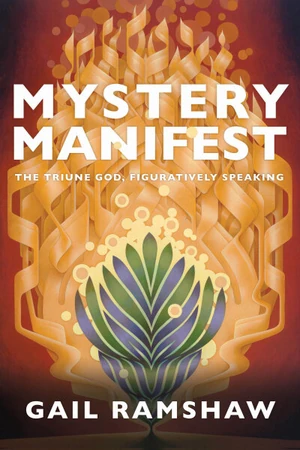
Mystery Manifest
The Triune God, Figuratively Speaking
- Theology
- Preaching & Worship
- Publisher: Fortress Press (Augsburg Fortress)
- Published: 2025
FritzSearch.com earns a commission on purchases made through Bookshop.org links.
Publisher's Description
Renowned liturgist and scholar Gail Ramshaw mines the treasures of the Bible, patristic sermons, theological treatises, mystical reveries, liturgical texts, hymns, and poetry to craft a richly textured collection and framework for thinking about the language Christians use to address and describe the triune God. More than a compilation, yet more practical than a purely theological treatise, Mystery Manifest is a volume that liturgists, ministers, and theologians will return to again and again seeking wisdom and insight into the figures of speech humans have developed to express the ineffable. With astute analysis and an eye for the creativity of our language over time, Ramshaw grounds readers in the realm of metaphor as practice before presenting an example--the metaphor of God the Fire--as finely layered illustration. She then covers each of the Persons of the Trinity in turn before culminating with Trinitarian and extended metaphors for God. Readers will find in these pages a wealth of resources for liturgical study, homiletical preparation, worship preparation, and theological reflection. Scholars and ministers alike will want to keep a copy readily available on their shelves.
Endorsements (6)
“Praise for Mystery Manifest As I have come to expect of Gail Ramshaw’s writing, her use of language in Mystery Manifest is both graceful and provocative: graceful in her steady exploration of image and word; provocative in the many questions she poses but does not answer throughout the book. She gently but persistently presses us—and press she does—to a deeper reading of scripture, fuller engagement with its varied figures of speech, and humble awareness of the inadequacy of all language in describing who God is for us.”
“book, Ramshaw provides us with a dazzling array of images, titles, and descriptions with regard to the three Persons of the Trinity, as well as the Trinity as such. She consistently provokes us into rethinking our categories and engaging in deeper thought. The many questions sprinkled throughout invite us into a conversation with her, with ourselves, and with others. I doubt there is anyone who will not be profoundly challenged by this work.”
“No one opens up the way we tell the truth about God with figures of speech like Gail Ramshaw. At once an exposition of the ways we speak of God and a repeated invitation to consider what this range of figural speech calls out of us, this book will be invaluable to theologians, liturgical leaders, and catechists alike. This is Ramshaw’s masterwork.”
“One of the great observations in Gail Ramshaw’s new book, Mystery Manifest, is that Christianity has no original language. Instead, it always has been and always must be translated. This point of view is universal, and even a pastor like me in Finland, a small Northern European country, using Finnish as a working language, can benefit from this book written in English about the language of faith and about the names we use for God. Every language and every generation must give the Christian faith a new translation, and this book helps us to do that. We have a dilemma: it is impossible to speak of God in the precise way the Western society would prefer. Yet we have been called to speak and sing. To communicate our ideas or experiences of God, we must use images, parables, and figures of speech, and be satisfied with the obscure picture they paint, like a piece of art that changes when you take a step closer or further away. Gail Ramshaw has written many remarkable books about the language of faith. This may be the most important one of them. For all, it is a treasury for many meditations and sermon preparations. Tolle, lege!”
“Gail Ramshaw’s book is a treasury of biblical and church sources to think and speak about God the Trinity, from anthropomorphic to naturalistic to mythical figures of speech. Ramshaw argues persuasively that we need a community to recognize metaphorical intention in religious discourse, relying on more than words or sounds, but on images, gestures, and symbols to communicate divine mystery. After reading her book, the richness of the lectionary alone will acquire new meaning for you.”
“wide-ranging selection of examples drawn from post-scriptural sources, both classic and contemporary. Ramshaw’s navigation of cutting-edge topics in the rapidly moving field of language theory, such as essentialism and binary limitations, make this book not only a treasure trove of images to enrich liturgy and prayer but also a wise and timely guide to today’s evolving questions regarding theology and language.”
See something wrong on this page? Report a problem