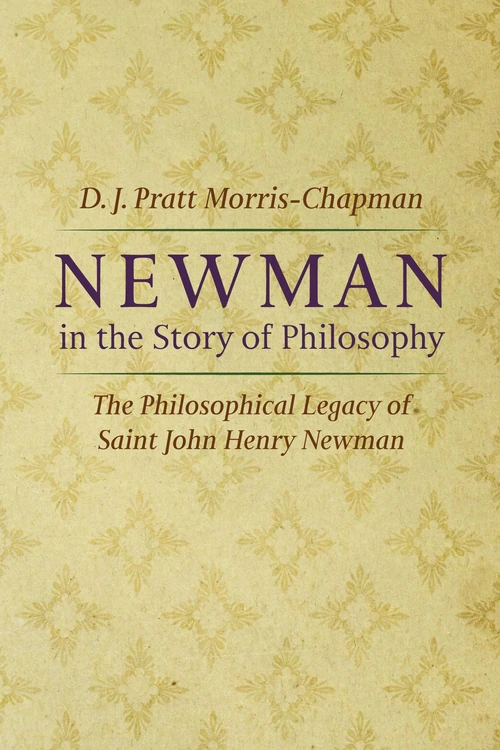
Newman in the Story of Philosophy
The Philosophical Legacy of Saint John Henry Newman
- Philosophy
- Publisher: Pickwick Publications (Wipf and Stock)
- Published: 2021
FritzSearch.com earns a commission on purchases made through Bookshop.org links.
Publisher's Description
Saint John Henry Newman is widely acknowledged to be an important theologian. Despite this, Newman commentators believe that his work has received little recognition by philosophers. This book explores whether or not Newman's supposed philosophical isolation constitutes a misconception in Newman historiography. First of all, it does this by examining Newman's general philosophical reception over the last two centuries; surveying a wide range of philosophical positions and philosophers from the many different branches of this discipline. The book then focuses upon whether or not Newman has made a contribution to one specific philosophical position, seldom given attention within Newman scholarship: the particularist approach to epistemology. In its investigations into this and the other more general dimension of Newman's philosophical reception, the book offers an historical re-evaluation of Newman's philosophical legacy.
Endorsements (3)
“Pratt Morris-Chapman, in his original study of John Henry Newman’s intellectual contribution, persuasively establishes that Newman, most readily recognized as a theologian and canonized saint, left another legacy as an influential philosopher both in his own time and in contemporary discourse.”
“In all aspects of daily living, even more in the religious domain, we tend to belittle what is essential to human flourishing: the art of thinking. What Dr. Pratt Morris-Chapman argues for in this publication is how an eminent theologian like St. John Henry Newman forms part of the story of philosophy. In exploring the way in which Cardinal Mercier and Roderick Chisholm use Newman’s defense of religious belief, the author highlights the ability of this theologian to reveal the idea that reason is a foundational element within the logic of faith. This literary work is to be valued as it responds to our quest of giving a sense of purpose to religious thinking for contemporary philosophy.”
“This extensively researched book traces the abiding influence of John Henry Newman, especially by relating it to the particularist epistemology of the philosopher of religion William J. Abraham. It explains how both authors explore questions of the deepest relevance for our times: the limits of rationalistic liberalism, the credibility of religious belief, and the nature of religion as a historical phenomenon. It is valuable reading for both the secularly curious and the religiously committed.”
See something wrong on this page? Report a problem