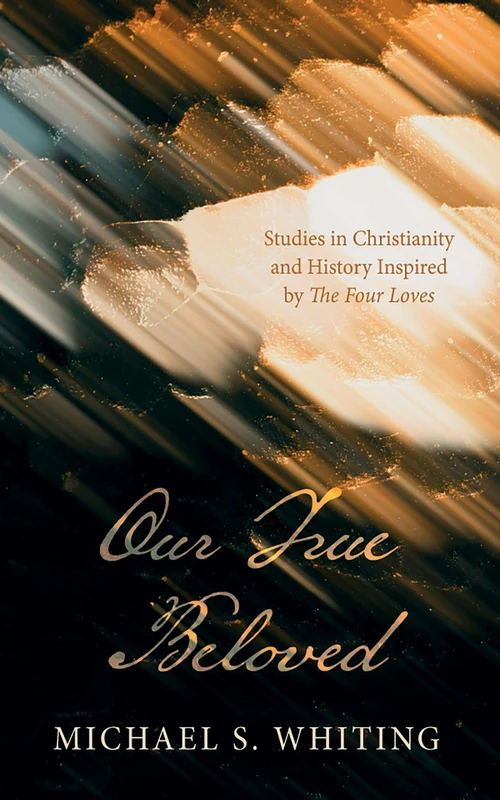
Our True Beloved
Studies in Christianity and History Inspired by The Four Loves
- History & Biography
- Theology
- Publisher: Wipf and Stock
- Published: 2024
FritzSearch.com earns a commission on purchases made through Bookshop.org links.
Publisher's Description
C. S. Lewis's masterpiece The Four Loves, published in 1960, provided the world with a Christian exploration of four dimensions of human love: extolling the divine blessings and warning of the idolatrous distortions in familial belonging (storge), friendship as a common quest (philia), romantic desire for personal union (eros), and concluding with the perfection of divine, unconditional love (agape). Whiting uses the four loves as a framework to interpret the Christian love of God in historical movements across Catholic, Orthodox, Protestant, and Pentecostal/Charismatic churches. He illuminates the often reactionary and competing tensions swinging between emphases on loving God in liturgical ritual and worship (storge), the active moral life (philia), personal spiritual experience (eros), and approaches of faith to suffering (agape). Synthesizing a panoramic view of Christian history with philosophy, literature, and biblical reflection, Whiting shows how the love of God is diminished when the loves become fractured. He advocates for an integrated, holistic love of God that both avoids excesses and challenges the modern narrative of secular progress.
Endorsements (2)
“Our True Beloved will change the way you think and read and serve. With the help of C. S. Lewis, Michael S. Whiting invites us to explore the church’s four loves for God and how these loves, left to themselves, have led to many a secular and Christian failure. This is a book to ponder and to pray alongside.”
“What is impressive about Whiting’s tour de force is the breadth of literature and episodes in the history of the diverse Christian church that he insightfully uses to help us see the ways in which manifestations of the four loves, as Lewis unpacked them, have played off each other for good or ill. And then he perceptively helps us see how a balanced integration of the practice of these loves can keep the church on course in a world that has grown increasingly secular.”
See something wrong on this page? Report a problem