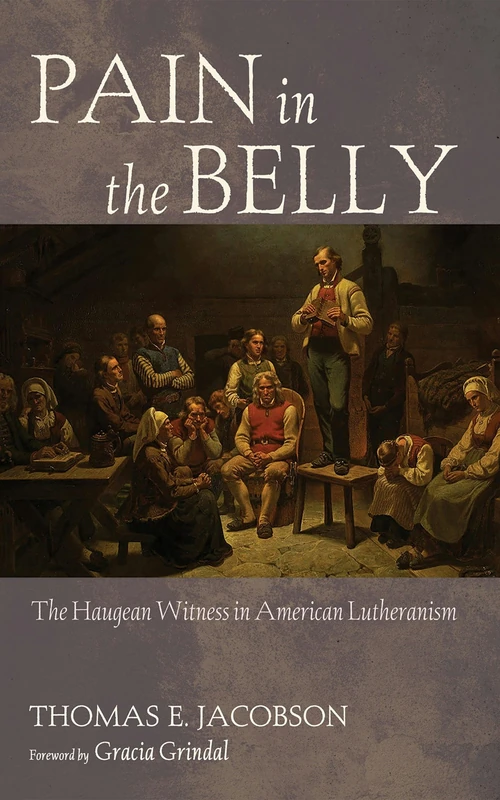
Pain in the Belly
The Haugean Witness in American Lutheranism
- History & Biography
- Publisher: Wipf and Stock
- Published: 2024
FritzSearch.com earns a commission on purchases made through Bookshop.org links.
Publisher's Description
Who were the Haugeans, and what happened to them? Contemporary American Lutheranism is an amalgamation of various influences and ethnic traditions, yet the contributions and enduring identity of the Haugeans, a Norwegian sub-tradition known for their variety of pietistic expression, have received little attention from historians in the process of American Lutheran merger of the previous decades. This book takes a closer look at the Haugean tradition within American Lutheranism and its distinct emphases. Most importantly, it demonstrates how this group of Lutherans carried forward their tradition within larger organizations. Seeking to serve as positive spiritual leaven within the larger batch of dough of the Lutheran tradition, the leaven of Haugeanism was not universally appreciated, causing for some pain in the belly upon consumption of this dough.
Endorsements (4)
“Thomas Jacobson provides a much-needed overview of the Hauge movement, an expression of Norwegian-American pietism. Though ridiculed as legalistic, the followers of Hans Nielsen Hauge, Norwegian lay revivalist, advocated an experiential approach to faith and a passion for outreach. Today’s church would benefit mightily if it were to retrieve the best aspects of this heritage.”
“This is an extremely insightful look at the continuation of the Hauge revivalistic movement in America after its denominational expression was merged into the rest of Norwegian-American Lutheranism in 1917. Haugeanism in the twentieth century struggled to continue as a movement within a larger group, mainly through parachurch organizations and other entities. Jacobson has written a fine study here, modeling how one might trace the continuation of an ethos, rather than a denominational structure.”
“Lutheranism is a divided tradition. The majority church is liturgical, sacramental, and episcopal in governance. The minority is Pietist, asserting that genuine faith requires the spiritual rebirth of the individual in the fellowship of believers. The Hauge Synod belongs to this minority. Suppressed in Norway, the Hauge movement found a home in America, creating a legacy from which the declining church of today could learn. Jacobson tells the story of the Synod skillfully and thoroughly.”
See something wrong on this page? Report a problem