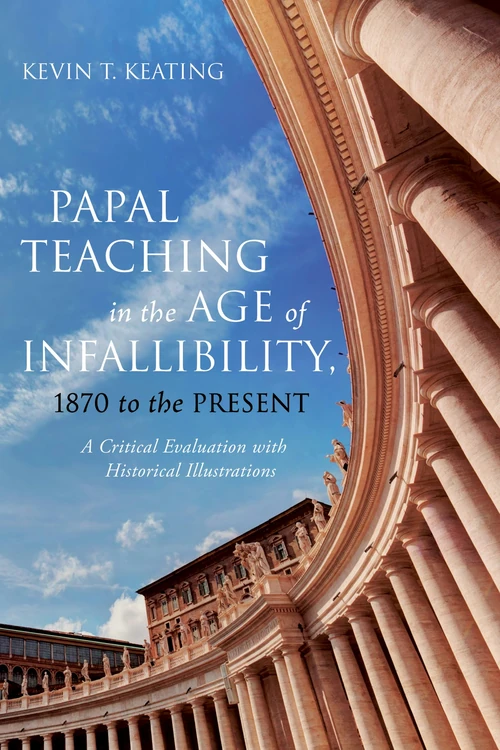
Papal Teaching in the Age of Infallibility, 1870 to the Present
A Critical Evaluation with Historical Illustrations
- History & Biography
- Theology
- Publisher: Pickwick Publications (Wipf and Stock)
- Published: 2018
FritzSearch.com earns a commission on purchases made through Bookshop.org links.
Publisher's Description
Kevin Keating examines the major writings of the Roman Pontiffs from Pius IX in the last half of the nineteenth century to the most recent writings of Francis. He explores the shift in papal focus from internal church matters and attacks on modern thought to concern for matters affecting all of humanity--not just spiritually, but socially, politically, and economically as well. Looming over all of these teachings is the specter of the doctrine of infallibility. First defined in 1870 to cover only papal infallibility, it would be expanded in the 1960s to include the exercise of infallibility by the worldwide college of bishops. Keating discusses the most significant themes dealt with by popes during this period--the Bible, religious freedom, church-state relations, social doctrine, human sexuality, ecumenism, and interreligious dialogue. He describes how papal teaching has changed, developed, and even been contradicted by later popes, although they have failed to expressly acknowledge departures from prior teaching. He details how the doctrine of infallibility, far from serving to bolster the credibility of papal teaching, often has served to undermine it.
Endorsements (1)
“Kevin Keating may not be infallible, but his careful, lawyer-like review of the doctrine of infallibility informs, instructs, and challenges. Vatican II introduced the bishops as a competing platform in matters of faith and morals. The jury is still out whether this strengthens the institutional church or divides it. One thing is certain—Keating’s book deserves serious study by those seeking to understand the church in the twenty-first century.”
See something wrong on this page? Report a problem