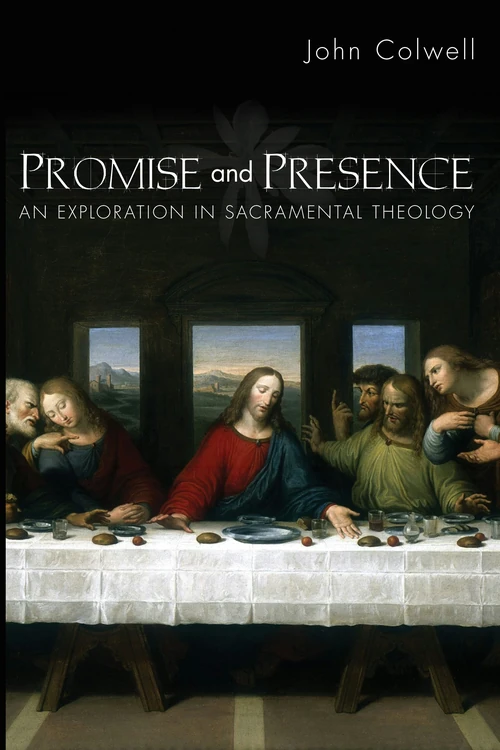
Promise and Presence
An Exploration in Sacramental Theology
- Theology
- Publisher: Wipf and Stock
- Published: 2011
FritzSearch.com earns a commission on purchases made through Bookshop.org links.
Publisher's Description
John Colwell presents a robust sacramental theology for Protestant churches. He maintains that a doctrine of the Trinity leads us to conceive of God's gracious engagement with his creation as one that is mediated through that creation. And this lies at the foundation for an understanding of the sacraments. Colwell further argues that the Church and Scripture confer context, definition, and validity on all other sacramental events. The final section reconsiders the seven Sacraments of the Catholic tradition in the light of the understanding of sacramentality developed earlier in the book: baptism, confirmation, the Lord's Supper, cleansing, healing, ministry, and marriage. Colwell discusses the Sacraments from an evangelical perspective but with a committed ecumenical intent.
Endorsements (4)
“[This] is a remarkable effort, and would be even if it failed. As it is, it is carried through with wide scholarly range, conceptual sophistication, and wit.”
“We live in strange ecclesial times. Who could have anticipated a wonderful book on sacraments by a Baptist theologian? But John Colwell has done nothing less than write an extraordinary constructive account of sacramentality that anchors the sacraments in the very nature of God ... Highly recommended for Catholic and Baptist alike.”
“a remarkable achievement, exploring a sacramental theology which is both evangelical and thoroughly Catholic . . . A lively, pungent, sometimes provocative account which is grounded in pastoral and personal experience and draws on a deeply scholarly grasp of both historical and modern theology . . . Practical theology as it should be done.”
“Not just the splendid Protestant textbook on the sacraments that we have needed for many years, but also a profound reflection on the doctrine of God, on grace, and on revelation. Only on this kind of basis can we ever develop sensible visions of Church and ecumenism.”
See something wrong on this page? Report a problem