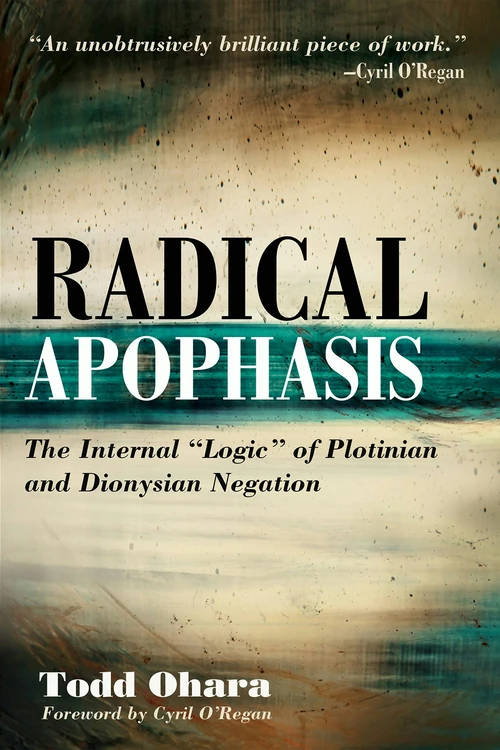
Radical Apophasis
The Internal “Logic” of Plotinian and Dionysian Negation
- Philosophy
- Publisher: Pickwick Publications (Wipf and Stock)
- Published: 2020
FritzSearch.com earns a commission on purchases made through Bookshop.org links.
Publisher's Description
This book exhibits the richness and sophistication of Plotinian and Dionysian apophatic theologies by explicating their respective internal "logics." It articulates the unique metaphysical status and explanatory role that the One and God, respectively, play in Plotinus's and Dionysius's reflections, showing the way in which apophasis is generated and sustained by the metaphysical-explanatory lines of thought in which the One (Plotinus) and God (Dionysius) function as the ultimate, unconditioned source of everything else. In the context of explanation, negation serves to convey the incomparable reality of the One or of God as beyond being. However, the metaphysical and explanatory lines of thought are themselves situated within the broader context of the soul's ascent to mystical union with the One or with God. From this broader perspective, the discursive practice of negation constitutes the basis of preparing the soul for mystical union. Preparation for mystical union involves the cognitive and trans-cognitive practice of negation, which enables the soul to progress towards and become united with the One or God. This study is motivated by the desire to more deeply understand apophasis as deployed in different philosophical, theological, and religious contexts, including the work of contemporary thinkers such as Jean-Luc Marion.
Endorsements (3)
“Todd Ohara gives us a clear, compelling, and illuminating read of two different types of apophatic theology by, respectively, Plotinus and Pseudo-Dionysius. Looking to the past, Ohara shows how they underlie different types of traditional Christian mystical theology and, looking forward, how they resonate with contemporary thinkers like Jean-Luc Marion.”
“I warmly recommend Todd Ohara’s impressive exploration of radical apophasis in connection with the works of Plotinus and Dionysius. It explores these thinkers in their likeness and unlikeness, with special reference to the internal logic of negation at work in their metaphysical and theological thought. The work is engaging, lucid, and insightful. It has many excellences. It will be of interest to analytically oriented thinkers who value lucidity and precision in their studies. The specialist scholars will be satisfied and challenged. The work is well laid out with a fitting structure. It will give much food for thought to those perplexed by the fundamental perplexities of metaphysics and theology. It is not bewitched by the Heideggerian framing of the Western tradition and in an illuminating way it will release the reader to approach anew the treasury of metaphysical-theological richness locked away by the spell of that framing.”
See something wrong on this page? Report a problem