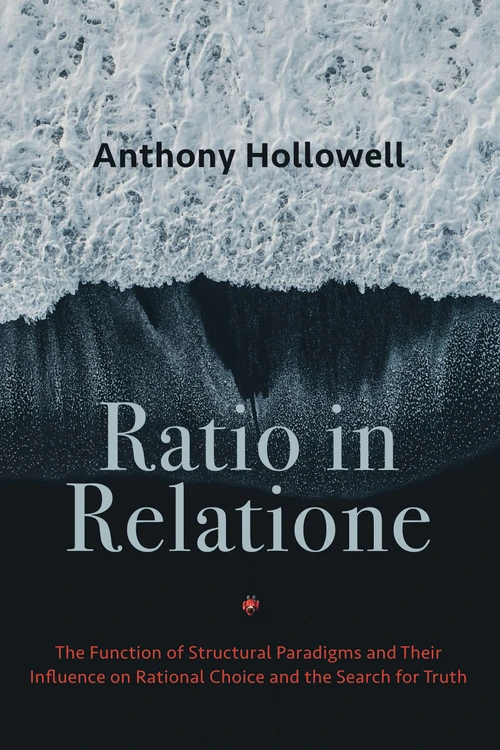
Ratio in Relatione
The Function of Structural Paradigms and Their Influence on Rational Choice and the Search for Truth
- Philosophy
- Publisher: Pickwick Publications (Wipf and Stock)
- Published: 2020
FritzSearch.com earns a commission on purchases made through Bookshop.org links.
Publisher's Description
For nearly every important decision, we often receive the same advice: think for yourself. Such a statement assumes that rational thought is a type of "do-it-yourself project," that what a person thinks is derived from one's independent human existence. But there are some critical thinkers who challenge this assumption, showing the ways in which rational thought is molded and determined in forceful ways by various elements that lie outside the free choices of an individual. According to both Alexis de Tocqueville and Romano Guardini, structural elements within various cultures exhibit a distinct power over rational thought and dispose human persons to specific patterns of logic, and according to their evidence, what a person thinks is inextricably bound to their relationships. In this book, the social dimensions of rational thought can be more clearly seen, even by those conditioned to think that they can think for themselves.
Endorsements (2)
“Ratio in Relatione examines how relational elements of human persons underlie our nature as self-directed rational beings. Anthony Hollowell uses the social analyses of Alexis de Tocqueville and Romano Guardini to establish his general thesis about human reason, as well as to illuminate how relational elements in modern social forms shape our paradigms of rational discourse. This innovative study will interest students of de Tocqueville and Guardini, as well as anyone concerned with how human rationality matures and flourishes.”
“Ratio in Relatione is a lucid account of the power of authority over human reason. Through its insightful investigation of the influence of majorities and technology on our democratic, technology-driven culture, Ratio in Relatione offers a timely invitation to readers to examine the roles that their relationships play in setting their options and their standards for belief and action, both for the good and for the bad.”
See something wrong on this page? Report a problem