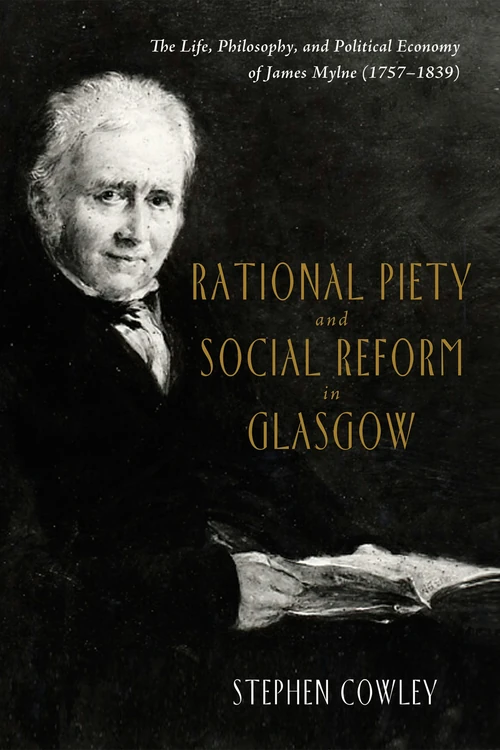
Rational Piety and Social Reform in Glasgow
The Life, Philosophy, and Political Economy of James Mylne (1757–1839)
- Philosophy
- Publisher: Wipf and Stock
- Published: 2015
FritzSearch.com earns a commission on purchases made through Bookshop.org links.
Publisher's Description
James Mylne (1757-1839) taught moral philosophy and political economy in Glasgow from 1797 to the mid-1830s. Rational Piety and Social Reform in Glasgow offers readers Mylne's biography, a summary of his lectures on moral philosophy and political economy, several interpretative essays, and a collation of his introductory lecture. Mylne's moral philosophy lectures cover the intellectual and active powers of man and offer an account of his duties to God, neighbor, and self. He diverges from the "moral sense" and "common sense" traditions associated with Francis Hutcheson and Thomas Reid in Glasgow. He reinstates reason as the guiding principle of conscience and argues for utility as the predominant criterion of morality. Mylne was also active among the Whig "friends of Mr. Fox" and in the Glasgow Reform Association, for his theory of the sovereignty of reason drove his view of political reform and the concept of value in his lectures on political economy. In a criticism of Adam Smith, Mylne interprets use-value as prior to exchange value, founding it in lawful desires identifiable by a merchant community. Mylne's political opinions and activity among local political reformers and literary societies exemplify the Glasgow Whig tradition.
Endorsements (2)
“In Rational Piety, Stephen Cowley presents an ambitious, and largely compelling, argument that the Glasgow professor James Mylne was an original thinker who filled a significant gap in the history of Scottish philosophy between the realism at the height of the eighteenth century and the Glasgow idealists of the later nineteenth century.” “Mylne’s correspondence, and information culled from numerous sources, including newspapers, journals, minutes of church, society, and university meetings, and Mylne’s library borrowing records. Fortunately, Cowley is up to the challenge, and his well researched, scholarly nuanced and meticulously documented study is a significant contribution to Scottish Philosophy.”
See something wrong on this page? Report a problem