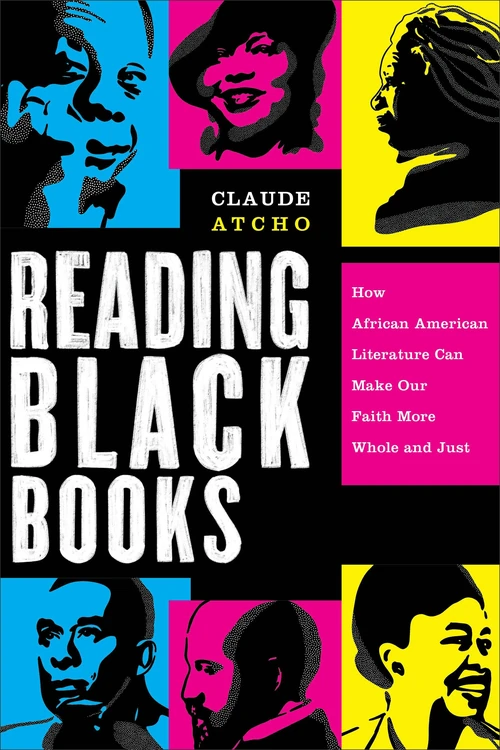
Reading Black Books
- Theology
- Ethics, Culture & Social Issues
- Publisher: Brazos Press (Baker Publishing Group)
- Published: 2022
FritzSearch.com earns a commission on purchases made through Bookshop.org links.
Publisher's Description
Christianity Today 2023 Book Award Finalist (Culture & the Arts)Midwest Book Review 2023 Gold Book Award Winner (Nonfiction - Religion/Philosophy)Learning from Black voices means listening to more than snippets. It means attending to Black stories. Reading Black Books helps Christians hear and learn from enduring Black voices and stories as captured in classic African American literature. Pastor and teacher Claude Atcho offers a theological approach to 10 seminal texts of 20th-century African American literature. Each chapter takes up a theological category for inquiry through a close literary reading and theological reflection on a primary literary text, from Ralph Ellison's Invisible Man and Richard Wright's Native Son to Zora Neale Hurston's Moses, Man of the Mountain and James Baldwin's Go Tell It on the Mountain. The book includes end-of-chapter discussion questions. Reading Black Books helps readers of all backgrounds learn from the contours of Christian faith formed and forged by Black stories, and it spurs continued conversations about racial justice in the church. It demonstrates that reading about Black experience as shown in the literature of great African American writers can guide us toward sharper theological thinking and more faithful living.
Endorsements (7)
“This book breathes the Black experience with overtones of strength and hope and Jesus. Reading Black Books pays homage to brilliant Black scholarship while demanding we pay attention to the Christ it points to. Well-written and unique.”
“Atcho opens his book with the acknowledgment, ‘Right now, Black voices are in.’ Thank God for that! But his claim also implies the embarrassing iihistory where Black voices were silenced. For the God who created all people, what a sorrow that churches have been divided and some voices amplified over others. Atcho’s book participates in redemption by handing the mic to Ellison, Wright, Hurston, Morrison, and others. Even more than extracting truth from their work or increasing our empathy with their characters, Atcho highlights how this literature discloses eternal verities. We dig into Countee Cullen’s portrayal of Christ, Wright’s depictions of sin and justice. By attending to Black books, we renew our faith in the God who did not leave us to carve our own path but who revealed himself through his creatures and the stories they tell as they reach for him.”
“With literary nuance and careful theological reflection, Claude takes the reader on a potentially transformative journey. The world needs more theologically reflective books on substantive literature, like this one. It deserves wide reading.”
“This book is a superb achievement that combines keen theological insight and in-depth literary analysis in a highly accessible format. Under Atcho’s masterful guidance, classic works of African American literature become an invitation to Black experience and, thereby, to a deepened Christian imagination. With its focus on the beauty of great stories, Reading Black Books has the potential to transcend ideological barriers and to open up new paths of discipleship for all Christians at this cultural moment.”
Rev. Matthew Wilcoxen
“Claude Atcho has artfully crafted a masterpiece of literary and theological reflections. Reading Black Books dares us to better see and understand the Black experience and, in doing so, to better see and understand ourselves. Claude is our guide to embracing and embodying a more whole and just faith through the study of Black books.”
“I met Claude and his family when they moved to Boston to plant a church here a few years ago. When Claude guest preached, I told my husband I thought we’d just heard the next Tim Keller. Claude is a gifted communicator with a particular flair for speaking to people of different backgrounds and educational levels and carrying a broad audience with him. I’m thrilled that he has applied his skill to this fascinating and timely project. This is his first book, but I’m confident it will not be his last. I see Claude as a rising star, and I look forward to watching God use him in the coming years, both in print and in the pulpit.”
“No one knows better or shows better than Atcho how twentieth-century African American literature is equipment for a better, truer orthodoxy. Reading Black Books offers brilliant and accessible theological readings of this literature that function—and feel—like the pastoral care we desperately need. Faithful to the works on their own terms, Atcho recognizes both the unflinchingly critical theological challenges and unfailingly constructive theological contributions of these matchless, essential works. His readings bear life-giving theological fruit that nourishes readers toward life together, daring to do so because the literature dares and the gospel declares! For generations, these books have been bread in the wilderness, a table prepared in the presence of enemies. Atcho’s work helps readers in these desolate, polarized days to find anew in African American literature the welcome table. This is the book—and its hope the hope in Christ—that I have been hungry for as a reader and as a teacher.”
See something wrong on this page? Report a problem