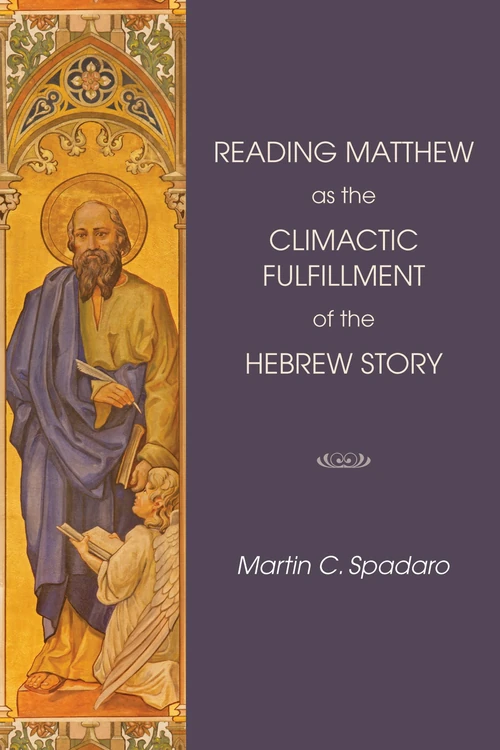
Reading Matthew as the Climactic Fulfillment of the Hebrew Story
- Biblical Studies & Commentaries
- Publisher: Wipf and Stock
- Published: 2015
FritzSearch.com earns a commission on purchases made through Bookshop.org links.
Publisher's Description
This book is a reading of Matthew's Gospel as though it were written to integrate with, advance, and conclude the existing body of Scriptures. Matthew is read as though John was the last prophet of God and Israel's last chance for repentance, and that Jesus was YHWH who had come to judge the Temple, priesthood, and covenant nation according to the terms of the covenant God made with Moses at Sinai. Through this lens, new interpretations are given to the infancy narrative, the Sermon on the Mount, the mission, the parables, and Jesus' arrival in Jerusalem along with the events that followed. By reading Matthew this way, a greater appreciation can be gained for its necessary place in the canon, and many of Matthew's well-known conundrums can be meaningfully addressed. As a Hebrew document, Matthew understood the necessity to record the crimes against YHWH/Jesus in Israel and Jerusalem as the ultimate cause for the termination of the ethnically and geographically bound covenant, which could then be replaced by the cross-cultural and international covenant that Christians now enjoy.
Endorsements (1)
“Reading Matthew as the Climactic Fulfilment of the Hebrew Story can be commended for three broad features. First, the book pays careful attention to Matthew as a holistic narrative, drawing its thesis out of the rich narrative tapestry that is Matthew’s Gospel. Although not often explicitly referring explicitly to the kind of narrative and reader-oriented devices Matthew uses to make an impact upon its readers, the book vigilantly reads each paragraph in the light of the whole Gospel and within the flow of Matthew’s unfolding drama of Jesus.” “... perhaps most pertinently for Martin’s major thesis, the book takes seriously Matthew’s overt desire to explain the coming of Jesus Christ amongst first-century Israel as the climax and fulfillment of the Hebrew story, and of the Hebrew Scriptures. Perhaps it is here that Spadaro is at his best. Guiding the reader through Matthew’s narrative about Jesus, he persuasively points out texts or patterns from the Hebrew Scriptures upon which Matthew potentially riffs.”
See something wrong on this page? Report a problem