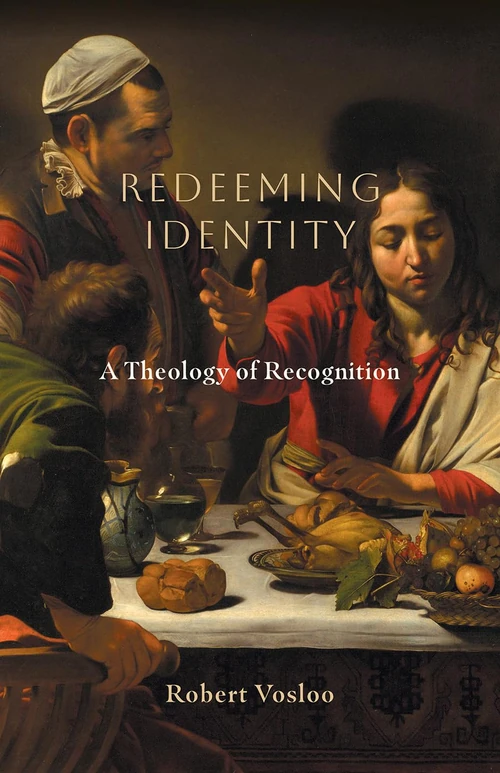
Redeeming Identity
A Theology of Recognition
- Theology
- Publisher: Fortress Press (Augsburg Fortress)
- Published: 2026
FritzSearch.com earns a commission on purchases made through Bookshop.org links.
Publisher's Description
Redeeming Identity Robert Vosloo focuses upon recognition as a crucial theological category for engaging questions of human identity and personhood. In light of the identity-distorting realities of misrecognition and uneven recognition, Vosloo affirms the promise of interpersonal recognition for human flourishing and societal well-being. But Vosloo also acknowledges that some forms of recognition might presuppose rather than challenge inherent pathologies within oppressive contexts. With this ambivalence in mind, the book argues--with reference to some historical and fictional examples--for an embodied theology of reciprocal recognition with three emphases. Firstly, such an account indicates that in our relationship with others we need to recognize our common humanity and our particular identity traits. Secondly, it is justice-orientated and grace-tinted. It should thus be situated within the creative tension between structure and gesture, justice and grace. Thirdly, a responsible theology of recognition amplifies the fundamental importance of "being recognized" (by God and others) and how this engenders an ethics of gratitude that enables new ways of seeing and acting. Since the book traces some contours for a theology of recognition, it also engage with biblical texts containing recognition scenes and key theological themes such as the imago Dei, the doctrines of justification and election, and the sacraments.
Endorsements (5)
“In a time of increasing alienation, Vosloo shows us that recognition, defined as interpersonal regard, is at the heart of what it means to be human as well as at the heart of the Christian gospel. Through the lens of scripture, visual art, film, story, and his own South African context, he articulates a theology of recognition that has personal and political consequence. He affirms the universal human need to be recognized for who we are, promotes an ethics centered on deep recognition of the other, and alerts us to the evil and harm rooted in nonrecognition or misrecognition. Vosloo has given us an immense gift by providing a theological foundation that not only helps us understand our historical context but also helps us live into a future full of promise.”
“In Redeeming Identity, Robert Vosloo offers a finely textured account of recognition that neither collapses difference into sameness nor severs grace from justice. Writing from the wounds and unfinished possibilities of South Africa, Vosloo shows why misrecognition is never merely interpersonal, but also ecclesial, political, and deeply theological. This is a profound book—an invitation to see, to be seen, and to learn anew the fragile, costly grace of shared humanity before God.”
“What a gift! Vosloo invites readers on a wonderful journey of eye-opening and thought-provoking encounters—with poems and songs, paintings and films, short stories and novels, classical literature and historical studies, dictionaries and doctrinal works, biblical pericopes and sermons from history, philosophical arguments and liturgical practices. Through respectful close-reading and attentive listening he does not tell us what to see, he invites us to recognize for ourselves—a surprising surplus of grace, questions, challenges, possibilities. Even the familiar becomes new as if one sees it again for the first time. It is indeed a theology of recognition—original, urgent, moving, addressing contemporary challenges in a theologically responsible and inviting way, as he intended.”
“When we recognize other people as friends, neighbors, and Christians, we are also ourselves transformed by these acts of recognition. Robert Vosloo shows that the processes of recognizing others are deeply embedded in Christian history, theology, and ethics. In these processes, the power of grace reorients the self and calibrates the community.”
“This study offers a rare conceptual integration of recognition theory and the theology of testimony. Its central insight—that recognition is incomplete until it is voiced—gives bearing witness an ontological weight it often lacks in contemporary discourse. Witness is no longer merely declarative; it is shown to be the outward form of an inwardly reconstituted life.”
See something wrong on this page? Report a problem