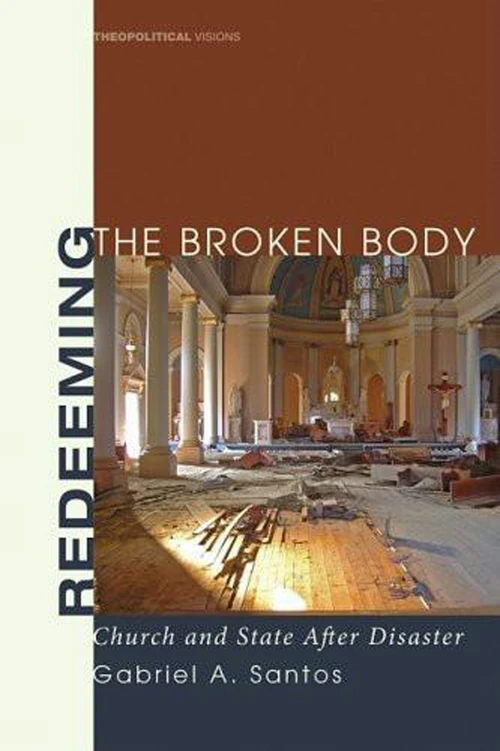
Redeeming the Broken Body
Church and State after Disaster
- Ethics, Culture & Social Issues
- Publisher: Cascade Books (Wipf and Stock)
- Published: 2009
FritzSearch.com earns a commission on purchases made through Bookshop.org links.
Publisher's Description
This book examines how repertoires of speech and action that are often considered to be mutually exclusive--those of church and state--clash or unite during the postdisaster period as local communities and cities struggle to establish a stable collective identity. Based on an analysis of forty in-depth interviews with disaster-response participants and over 325 print-media sources, this study explores, first, the extent to which ministers and citizens challenge statist narratives in order to publicly relay theological views; second, the cultural processes by which local places are nationalized and theologized; and third, the ecclesiological convictions necessary to peaceably advance the work of Christ's body after disasters.
Endorsements (3)
“Santos brilliantly shows how only a politics of the cross provides us with a true theoretical insight into the increasing instance of disaster and a true practical measure of restorative response.”
“I know of no other book like this one. Santos has taken his training as a sociologist and combined it with astute theological analysis. The book is fascinating because macro-observations about the larger contest and cooperation between the church and the nation-state are rooted in microanalyses of empirical data and interviews of ordinary people responding to disasters. This book will add to social theories about the 'states of emergency' under which we live. It will also add to theological reckonings with the idea that the whole of the Christian life is a response to disaster.”
“This book offers an original study-disasters and the church-state interactions that follow them-which sheds light on the big questions of civil religion and the use of theological language for political ends. Crises of various sorts have become catalysts in redrawing-or erasing-the lines between church and state, civic and sacred, citizen and believer. Not only does he offer a masterful account of how and why this happens, Gabriel Santos also provides a nuanced theological assessment on why this is harmful to the church and its mission. This is a well-written example of interdisciplinary scholarship done well. This timely and provocative book deserves broad reception and discussion.”
See something wrong on this page? Report a problem