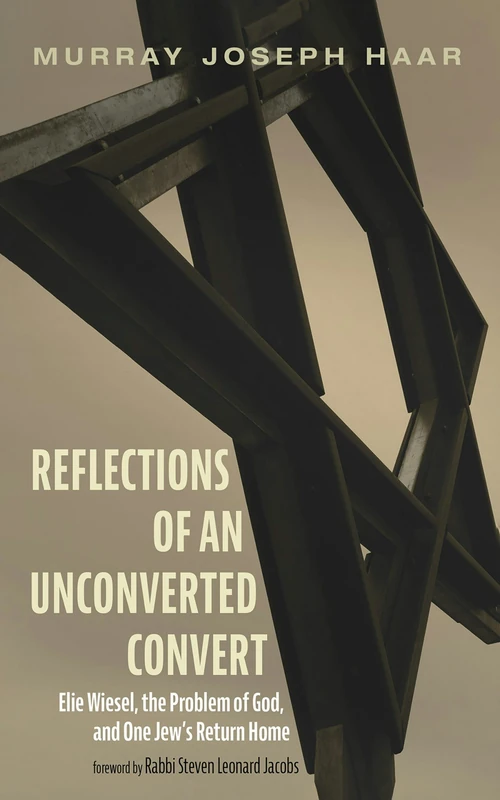
Reflections of an Unconverted Convert
Elie Wiesel, the Problem of God, and One Jew’s Return Home
- History & Biography
- Publisher: Cascade Books (Wipf and Stock)
- Published: 2022
FritzSearch.com earns a commission on purchases made through Bookshop.org links.
Publisher's Description
This is the story of Dr. Murray Haar's odyssey from Jewish tradition to Christianity and back again. As the child of Holocaust survivors, he struggled with questions of God and faith and finally left the religious tradition of his youth behind. He became an ordained Lutheran pastor and professor at a midwestern Lutheran College. Ultimately, through the influence of Elie Wiesel, he found the way back home to the Jewish tradition and community of his birth.
Endorsements (3)
Foreword
“Murray Haar’s story—no, his journey away from and his return to his Jewish roots and identity—sets his book far apart from those recounted by other children of Holocaust survivors, me included. It deserves not only a wide readership by both Jews and Christians and others but important conversations as well, for he has much to teach us all about life and faith in the aftermath of this horrific tragedy.”
“It may be too late to hear the cries of living Holocaust survivors—witnesses like Elie Wiesel of blessed memory. Yet we can still hear their children. As an ‘unconverted convert,’ Murray Haar offers just such a voice. Like Wiesel, resplendent with interrogative power, Haar refuses to let God off the hook of Holocaust betrayal and death. With impassioned questions, Haar confronts the problem of God. It’s a privilege to listen.”
“Through the prism of Elie Wiesel, Israel’s rich but underappreciated lament tradition, the book of Job, and his own experiences in both the Jewish and Christian faiths, Murray Haar explores what it means to speak honestly and faithfully about God after the Holocaust. Haar skillfully weaves memoir, midrash, and musings about the problem of God together in a discussion of how what happened ‘in those days’ remains deeply relevant for honest faith in our current day.”
See something wrong on this page? Report a problem