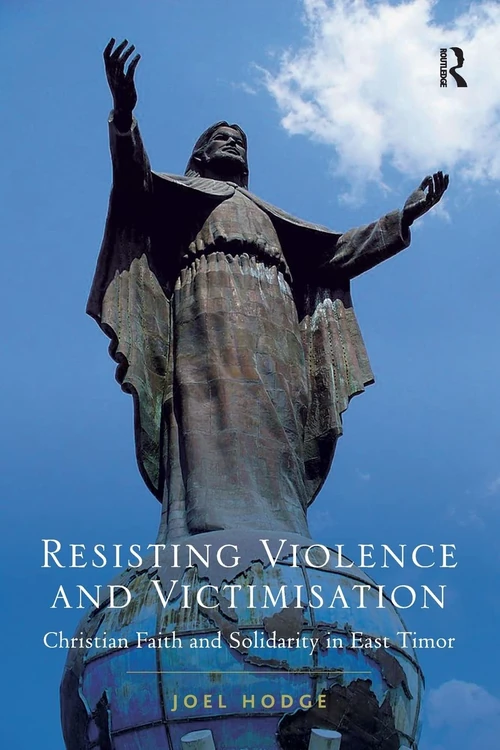
Resisting Violence and Victimisation
Christian Faith and Solidarity in East Timor
- Publisher: Routledge
- Published: 2017
FritzSearch.com earns a commission on purchases made through Bookshop.org links.
Publisher's Description
The reality and nature of religious faith raises difficult questions for the modern world; questions that re-present themselves when faith has grown under the most challenging circumstances. In East Timor widespread Christian faith emerged when suffering and violence were inflicted on the people by the state. This book seeks a deeper understanding of faith and violence, exploring how Christian faith and solidarity affected the hope and resistance of the East Timorese under Indonesian occupation in their response to state-sanctioned violence. Joel Hodge argues for an understanding of Christian faith as a relational phenomenon that provides personal and collective tools to resist violence. Grounded in the work of mimetic theorist René Girard, Hodge contends that the experience of victimisation in East Timor led to an important identification with Jesus Christ as self-giving victim and formed a distinctive communal and ecclesial solidarity. The Catholic Church opened spaces of resistance and communion that allowed the Timorese to imagine and live beyond the violence and death perpetrated by the Indonesian regime. Presenting the East Timorese stories under occupation and Girard's insights in dialogue, this book offers fresh perspectives on the Christian Church's ecclesiology and mission.
Endorsements (2)
“This is cutting edge stuff. Joel Hodge is a pioneer in a new understanding of Church, of Eucharist and of our relationship to our own violence. In Resisting Violence he models for us how the paradigm shift enabled by Girard's insights can yield a richer and more three-dimensional account of the Christian faith.”
“This gripping account of Christian resistance to violence admirably brings together theoretical analysis with the actual experience of the East Timorese under military occupation. Through people’s stories of faith and fear, Hodge shows how theology matters, how theology can be expressed in social practices. Hodge shows as well how careful ethnographic fieldwork can inform theological reflection. This book is a fine contribution to a new way of doing political theology, an interdisciplinary way that starts in the midst of people’s suffering and courage.”
See something wrong on this page? Report a problem