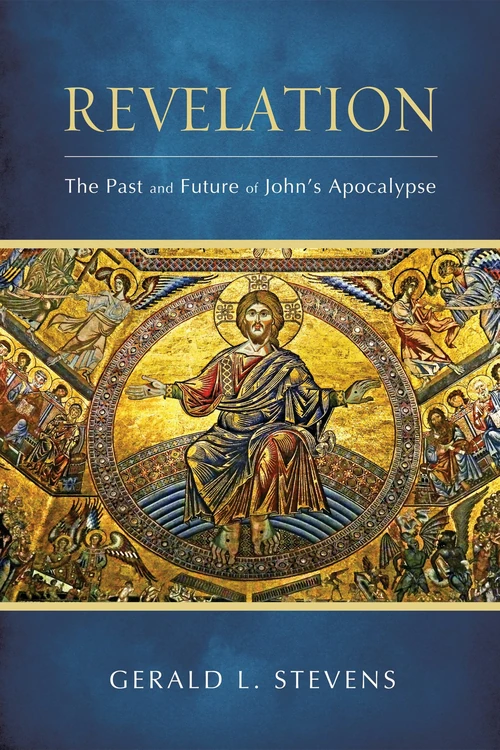
Revelation
The Past and Future of John’s Apocalypse
- Biblical Studies & Commentaries
- Publisher: Pickwick Publications (Wipf and Stock)
- Published: 2014
FritzSearch.com earns a commission on purchases made through Bookshop.org links.
Publisher's Description
This three-part study covers the history of interpretation, theological foundations, and exegesis. Copious illustrations from the author's worldwide travels enhance discussion of Rome's emperors, empire, and ideology as the premier horizon for understanding John's immediate context and meaning. Distinctive contributions include Stevens's effort to re-canonize Revelation by insisting on gospel concord, methodically interpreting all of Revelation through the lens of the seven churches and showing how Revelation's imagery consistently relates more to the incarnation than the Parousia. Stevens bypasses traditional millennial options to argue that Revelation is "passion-millennial"--the passion of Jesus predicates the passion of the church. Under Stevens's hands, Revelation becomes eminently sensible to the original audience and powerfully pertinent for today's church.
Endorsements (3)
“Audacious, entertaining, insightful, readable, brilliant in scope and execution, Gerald Stevens's Revelation will be the next textbook I use for my class on the book of Revelation. . . . Stevens shows that John is simply telling the gospel message in a different form for a new situation that speaks to John's own audience and ours today.”
“Stevens has written a guidebook to Revelation and its interpretation that is both compendious and highly accessible. . . . Hundreds of well-chosen photographs and illustrations help the world of Roman Asia Minor and of Revelation itself come alive. We are indebted to Stevens for opening up his classroom to all of us.”
“Gerald L. Stevens brings an exacting, pedagogical focus to three related issues: (1) the historical and literary context of the Revelation to John, (2) the history of its reception (especially in modern America), and (3) the enduring value of John's visions. In treating those questions, he has developed a subtle and comprehensive defense of the place of the Apocalypse within a mature, Christian imagination--as well as a trenchant critique of dispensationalist claims.”
See something wrong on this page? Report a problem