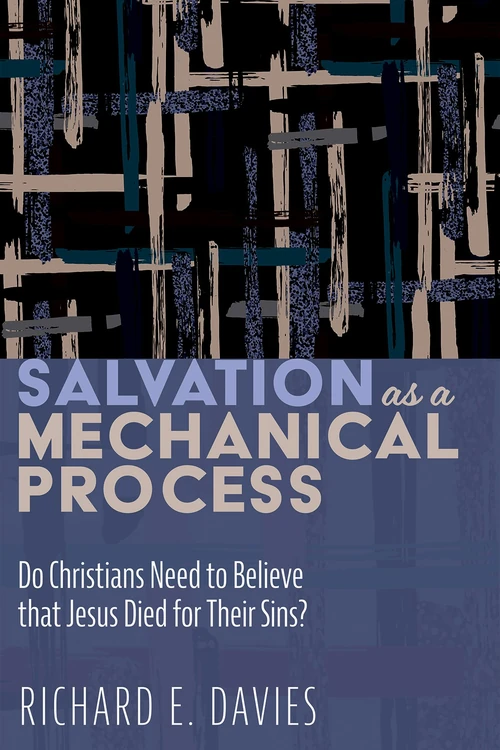
Salvation As a Mechanical Process
Do Christians Need to Believe that Jesus Died for Their Sins?
- Theology
- Publisher: Wipf and Stock
- Published: 2020
FritzSearch.com earns a commission on purchases made through Bookshop.org links.
Publisher's Description
Christians have been taught that Jesus died on the cross to pay a fine or ransom to expiate or atone for our sins. Furthermore, they have been taught that the death of Jesus is the only way individuals can receive eternal salvation. In general, this notion is called the "doctrine of blood atonement" or "penal substitution," or some similar name. One reason for this teaching is that the development of Newtonian mechanics has led us to believe that God's "laws of salvation" must be as easy to understand as the seventeenth- and eighteenth-century "laws" of our physical world. This book demonstrates that there are alternatives for understanding Jesus' execution that are consistent with the twentieth- and twenty-first-century understanding of our physical world. In fact, the early Christian writers (including the Bible itself) described these alternatives. "Sacrifice" was only one form of the early Christian narrative explaining the death of Jesus. Although "blood atonement" was understandable in ancient Roman culture, it is not understandable in our culture. The inevitable conclusion is that we should abandon "blood atonement" and develop one of the alternative ways of understanding the cosmic significance of Jesus' execution.
Endorsements (2)
“This daring book will jolt thoughtful readers theologically and methodologically. Davies, not shy about dismantling some longstanding Christian views of Jesus’ death, points to ‘the cosmic significance of the execution of Jesus’ and questions whether ‘blood atonement’ is still necessary for Christian theology. His innovative use of copious photographs (his own!) to illustrate Roman and early Christian thinking makes the narrative all the more alluring.”
“The meaning of Jesus’ death is a great mystery. The Bible and history of theology bring to light many of its deep places. But many Western Christians, drawn to mechanical explanations, have limited their gaze to the culturally outdated interpretation of sacrificial blood atonement. Davies shines his light on other interpretations more suitable to modern Western culture. Readers will be fascinated as he ably guides them through twenty centuries of Christian reflection on this mystery.”
See something wrong on this page? Report a problem