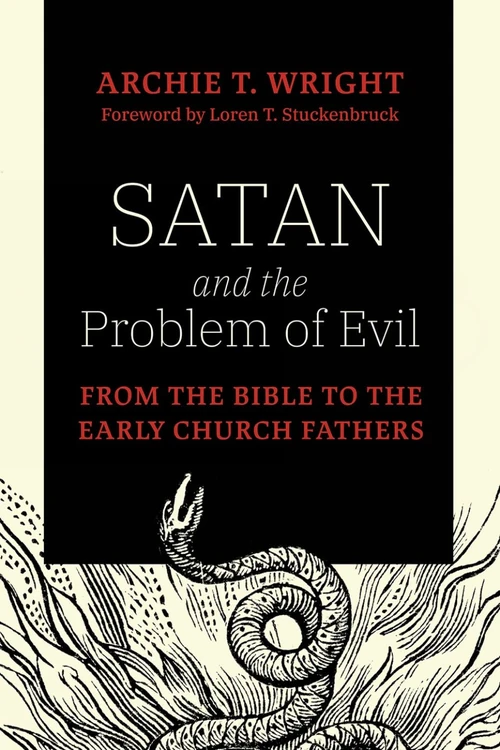
Satan and the Problem of Evil
From the Bible to the Early Church Fathers
- Theology
- Publisher: Fortress Press (Augsburg Fortress)
- Published: 2022
FritzSearch.com earns a commission on purchases made through Bookshop.org links.
Publisher's Description
Satan's transformation from opaque functionary to chief antagonist is one of the most striking features of the development of Jewish theology in the Second Temple Period and beyond. Once no more than an "accuser" testing members of the human community, Satan, along with his demons, is presented by Jewish apocalyptic texts and the New Testament as a main source of evil in the world. In Satan and the Problem of Evil, noted scholar Archie Wright explores this dynamic in both its historical and theological trajectories. Interactions with Zoroastrianism led Jewish and Christian writers of the Second Temple Period to separate God from responsibility for evil in the world. This led to the emergence of a heavenly being that is responsible for evil and suffering: Satan. Satan and the Problem of Evil charts the development of Satan traditions and the problem of evil from the Hebrew Bible and its various translations in the Greek Septuagint to Jewish literature from the Second Temple Period to the Greek New Testament. It concludes by examining the writings of the early church theologians, from the late first century through the fourth century CE. Wright argues that these latter writers present a shift in the understanding of Satan to one that is significantly different from the Jewish Scriptures, extrabiblical Jewish literature, and the New Testament. Accessibly written and comprehensive in scope, Satan and the Problem of Evil offers researchers, scholars, students, and even the general reader a definitive treatment of a perennial question.
Endorsements (6)
“In his new book, Satan and the Problem of Evil: From the Bible to the Early Church Fathers, published by Fortress Press, Archie T. Wright masterfully guides his readers through a complex web of literary sources pertaining to one of the thorniest and most enigmatic characters of early Jewish and Christian etiologies of evil—Satan. Wright’s book admirably succeeds in a thorough and meticulous exploration of the origins and early history of this elusive antagonist in the literature of ancient Israel, of various texts from Second Temple Period Judaism(s), the writings of the New Testament, and the literature of the apologists and theologians of the early church. Although Wright’s book deals mainly with the figure of Satan, it provides important methodological lessons for understanding other antagonists of early Jewish mythologies of corruption, including Melchiresha, Mastema, and Belial. A remarkable study, rigorous in character and judicious in quality throughout, it demonstrates Wright’s philological depth, historical prowess, and highly nuanced theological sensibilities. It is indisputably the definitive work on Jewish and Christian demonology in modern scholarship and will long hold that position. Methodological insights of this portentous study will continue to have a profound impact in upcoming decades on the field of early Judaism in general and on studies of Jewish demonology in particular. This brilliant, nuanced, and thought-provoking study is a must-read for everyone who is interested in the theology and history of early Judaism and early Christianity.”
“Scrolls and Pseudepigrapha. This interpretation led to the characteristics of early Christian literature, the period of the apostolic and early church fathers, in which the biblical opponent, the investigator satan, became the capital-S Satan, the heavenly evil being in direct opposition to the God of Israel and the church, and in some worldviews nearly as powerful. I warmly recommend this book to anyone who wants to get to know the worldview and the problem of evil in the Old Testament, the literature of the Second Temple Period, and early Christianity through in-depth analysis.”
“Brilliantly interweaving concerns for exegesis and theology, Archie Wright offers an illuminating survey of ancient perspectives on the problem of evil. Wright’s book makes scholarly findings on the fascinating history of Satan accessible and engaging, powerfully demonstrating how ancient discussions of the demonic can resound with sharp relevance in our own difficult times.”
“Archie Wright provides a learned, yet also accessible, examination of the development of the figure of Satan in early Jewish and Christian traditions as well as plausible reasons for this evolution. The result is a fascinating study of a figure who turns out to be remarkably versatile. Biblical scholars and students alike will enjoy reading this fine book.”
“How does Satan’s presence reconcile with God’s absolute sovereignty and human responsibility? Different groups, including the nascent Christian movement, clashed and separated on this issue from Second Temple Judaism. Wright’s analysis is a fascinating look at the eternal human quest for an answer to the ‘problem of evil.”
See something wrong on this page? Report a problem