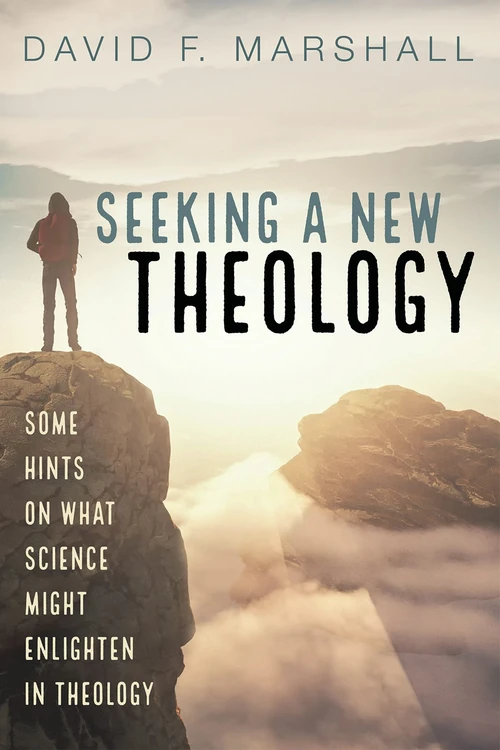
Seeking a New Theology
Some Hints on What Science Might Enlighten in Theology
- Science & Faith
- Theology
- Publisher: Resource Publications (Wipf and Stock)
- Published: 2021
FritzSearch.com earns a commission on purchases made through Bookshop.org links.
Publisher's Description
For those who think their beliefs are no longer valid, for all who wonder if there is any truth in religion, for anyone questioning why theology doesn't make sense--this is book for you. Here are arguments against some claims of faith. Science helps us gain new insights into what we used to believe. Recent discoveries in physics and other modern sciences have opened doors that may help you gain a new, more positive perspective on religion. For any of you who want to understand theological conundrums, here are some believable answers, including what happens when we die and whether we exist after death. A quick survey of world religions compares the beliefs of Christianity and how these present challenges lead to doubt; however, some interesting historical and scientific findings can aid you in gaining more insights which can foster your faith. These discoveries are capable of nurturing a sense of wholeness, overcoming doubts about the relevance of your faith. When that happens, your attitudes become more positive about learning what you can believe. This book helps you do that.
Endorsements (5)
“Theologians have a long history of promoting schisms. Today the most conspicuous schism is between learning, notably the sciences, and belief. David Marshall’s Seeking a New Theology aims to mend this schism and the enormous confusion and wrongs that result from it. His is not a prescription for a new belief cure-all. It is an open invitation to explore the variety of religious beliefs in light of new scientific mysteries able to evoke an innovative, more comprehensive, and more credible basis for belief.”
“Theology and science are often viewed as antagonists, totally different ways of understanding reality. David Marshall, however, sees them as potential partners. His remarkably understandable descriptions of insights from astrophysics to quantum mechanics offer hints that might enlighten long-held theological beliefs. Marshall’s finely honed skills as a teacher clarify diverse subjects, from Eastern religions to scientific views about whether life (consciousness) survives death. He offers highly informed perspectives by which to reexamine one’s own understanding.”
“This book is for all who question how faith and science can engage, enhance, and evolve the other. Through theological questions, biblical texts, perspectives from major world religions, and accessible scientific explanations, Marshall’s ability to ‘open doors’ between faith and science captures the creative tension of how faith and science can simultaneously expose limitations and expand possibilities for ‘probing the mysteries of God’s creation.’”
“If certain topics need to be addressed at this time, Seeking a New Theology is one. The pressing religious questions of our age are pertinent to understanding our social, political, and environmental problems. David Marshall steps in with relevant, cogent indicators toward answers! He has examined the widespread, insufficient contemporary understanding in a special way—with compassion, pointing to our ‘propositional uncertainty.’ That the author has thought long and hard about these issues is self-evident. Additionally, there is a genius of expression on his part, engaging us in his terse, often witty, writing. . . .”
“David Marshall’s delightful, broad-ranging, accessible, question-stimulating book can benefit (1) the increasing number of younger people raised with no religious background but who are curious about it; (2) those skeptical of established religious traditions but who consider themselves to be ‘spiritual’; (3) individuals hurt by the narrowness of their religious upbringing; and (4) believers still within a tradition seeking to expand more inclusively and generously what it means to ‘believe.’”
See something wrong on this page? Report a problem