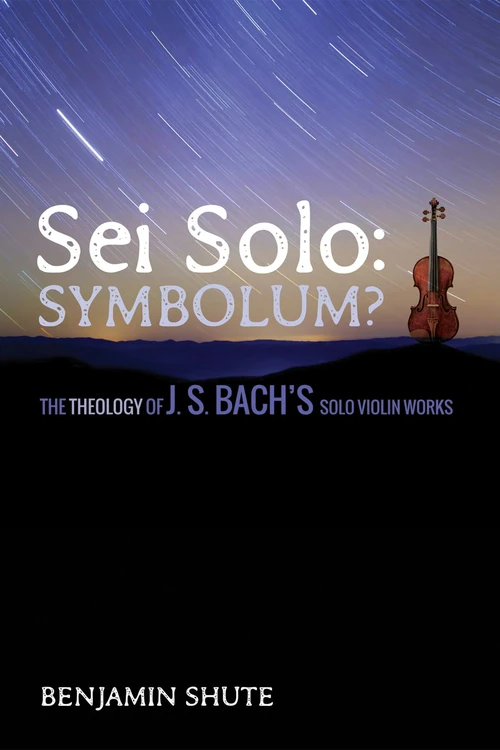
Sei Solo: Symbolum?
The Theology of J. S. Bach’s Solo Violin Works
- Arts & Literature
- Theology
- Publisher: Pickwick Publications (Wipf and Stock)
- Published: 2016
FritzSearch.com earns a commission on purchases made through Bookshop.org links.
Publisher's Description
One of the jewels in the crown of Johann Sebastian Bach's sacred music is its use of astonishingly subtle and complex allegorical and representational devices. But when similar devices appear in the context of one of Bach's untexted, secular, instrumental collections such as the Six Solos (sonatas and partitas) for violin, the question arises whether he might be intending to embed discernible theological significances there as well, thus infusing the secular with the sacred. Such designs would be reasonably plausible within Bach's musical, cultural, and religious context. Shute carefully investigates the extent to which musical features of the Six Solos that seem to invite theological parallels might indeed have been intended to do so. Although the precise extent of Bach's intentions cannot be ascertained with certainty, the degree of correlation among strong potential signifiers would seem to suggest that they, and many other features of the Six Solos, are best explained as the product of extensive theological-allegorical designs on Bach's part, like those evident in his texted vocal music.
Endorsements (2)
“Bach's music never ceases to astonish. In this fascinating study, Shute investigates the possibility that Bach's six works for unaccompanied violin might carry meaning that can plausibly be construed as a symbolum, a creed of his Lutheran faith expressed in tones alone. Assiduously avoiding the far-fetched methodologies and unfettered subjectivity that have marred some previous studies of this kind, he arrives at interpretations that are much more credible but no less astonishing. A major achievement!”
“Dr. Shute's heart for discovery and driving intellectual curiosity are on display here in this welcome volume. As a pedagogue, performer, and scholar, he shares his quest for meaning in music with us generously. Passionate and thoughtful, this engaging examination will invite you to ask questions and propel you into further study of Bach's music, of course, and interestingly enough, his life.”
See something wrong on this page? Report a problem