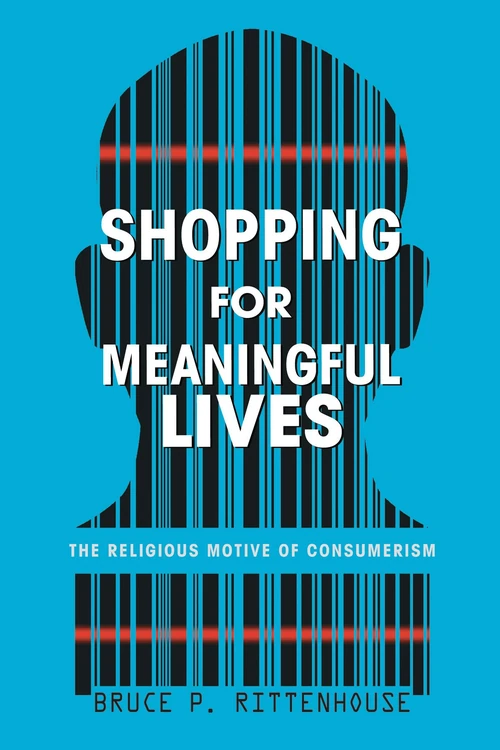
Shopping for Meaningful Lives
The Religious Motive of Consumerism
- Ethics, Culture & Social Issues
- Publisher: Cascade Books (Wipf and Stock)
- Published: 2013
FritzSearch.com earns a commission on purchases made through Bookshop.org links.
Publisher's Description
Consumerism is a problem. It deforms individual character, our sense of obligation to one another, and our concern for future generations and the environment. Even in the aftermath of the worst economic downturn in seventy years, it remains a defining feature of Western cultures. But, beyond this assessment, neither Christian theologians and ethicists nor secular economists and sociologists have understood what drives consumerism or what can be done to counteract it. This is the problem that Bruce P. Rittenhouse solves in Shopping for Meaningful Lives. Dr. Rittenhouse analyzes economic, sociological, and psychological evidence to prove that consumers behave differently than the current theories predict. Dr. Rittenhouse shows that consumerism functions as a religion. It provides a means of assurance that an individual life is meaningful. Because we need this assurance to live out our everyday lives, consumerism takes precedence over whatever other values a person professes--unless a person can adopt a different way to secure the meaning of his or her life. This interpretation explains how consumers actually behave. From the perspective of Christian theology, consumerism is a wrong answer to a problem of human existence that should be answered by faith in Christ.
Endorsements (2)
“Consumerism is a defining fact of the global age. In this fascinating book, Bruce Rittenhouse presents a compelling account of consumerism as a failed search for meaning in human life. Shopping for Meaningful Lives challenges readers to think deeply about consumerism and the motives that drive it. I recommend it to everyone interested in the relationship between religion, ethics, and the economy.”
“In this insightful book, Bruce Rittenhouse finds that the pervasive consumerism of our time reflects the widespread loss of Christian faith in the twentieth century and the failures of secular religious substitutes, such as nationalism and Marxism. Rittenhouse offers a skillful analysis not only of the origins, but also of the several forms modern consumerism has taken. If Americans hope to live more meaningful lives, they will have to turn away from the false worship of more goods and services.”
See something wrong on this page? Report a problem