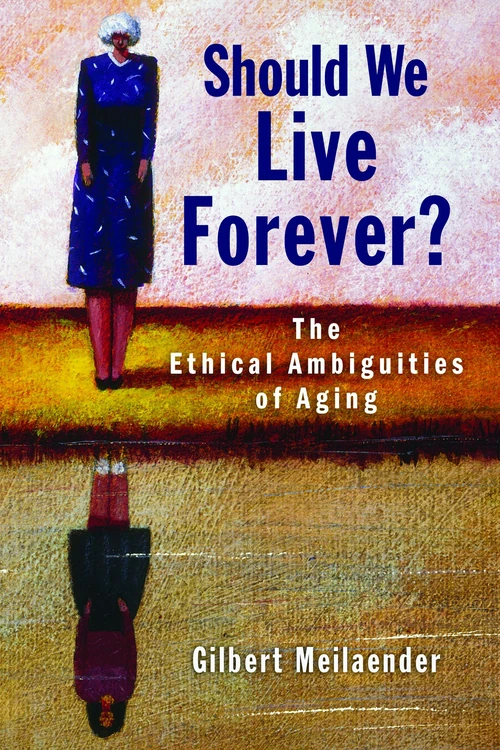
Should We Live Forever?
The Ethical Ambiguities of Aging
- Ethics, Culture & Social Issues
- Publisher: Eerdmans
- Published: 2013
FritzSearch.com earns a commission on purchases made through Bookshop.org links.
Publisher's Description
In Should We Live Forever? Christian ethicist Gilbert Meilaender puzzles over the implications of the medical advances that have lengthened the human life span, wrestling with what this quest for living longer means for our conception of living well and completely. As he points out in his introduction, "That we often desire, even greedily desire, longer life is clear; whether what we desire is truly desirable is harder to say."The six chapters of this book take multiple perspectives on issues surrounding aging and invite readers to consider whether "indefinitely more life" is something worth pursuing and, if humans are created for life with God, whether longer life will truly satisfy our underlying hunger.
Endorsements (4)
“In this masterful little book Gilbert Meilaender interrogates the project to extend human life indefinitely and shows that longer life cannot satisfy the deeply human longings that animate that project. Better, he proposes, to cultivate the virtue of patience in the face of our mortal limits. Not a patience of resignation, but a patience marked by gratitude for the gift of life, including its limits, and by eager hope for the fullness of life promised by the God who died so that we might live.”
“Gilbert Meilaender has been for several decades one of the two or three most provocative, insightful, and clear writers on religion and ethics. He's not afraid of uncertainty but wants to put it in the right intellectual space. Aging is a topic of extraordinary importance, and not only for those of us who are doing it. Meilaender's style is vintage, disciplined, and forceful.”
“As we have come to expect from Gilbert Meilaender, this is an intellectually rigorous and probing exploration of an urgent ethical issue. And as we have also come to expect, it is finally an eloquent and wise theological witness. Meilaender calls us to leave behind the futile search for meaning merely in an ever-extended human life span and urges us instead to see life as a journey shaped in freedom by God, who crafts for us a hopeful ending that we cannot always see but can always believe and trust.”
“Meilaender combines a poetic style of writing from a theological perspective with a scientific rigor of analysis to give us a book that is hard to put down. He rightly argues that human flourishing, or virtue, is more crucial than preventing aging or prolonging life.”
See something wrong on this page? Report a problem