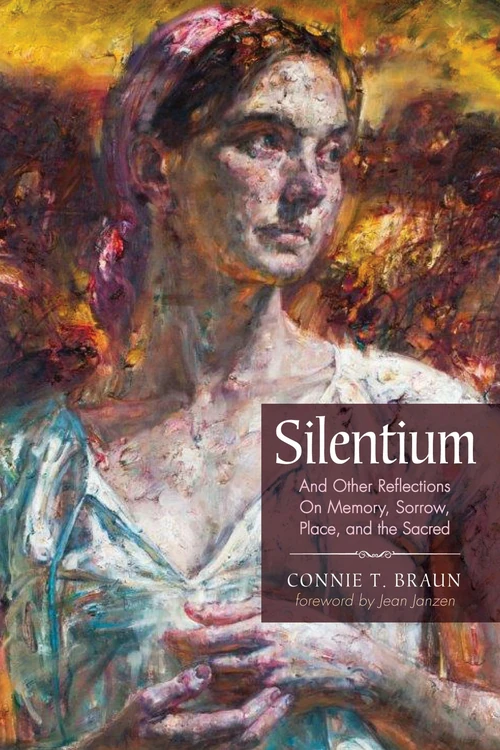
Silentium
And Other Reflections On Memory, Sorrow, Place, and the Sacred
- Arts & Literature
- Publisher: Resource Publications (Wipf and Stock)
- Published: 2017
FritzSearch.com earns a commission on purchases made through Bookshop.org links.
Publisher's Description
With this collection of meditative, personal, memoir, and lyrical essays and narrative poetry, Connie T. Braun explores the multi-valences of silence within themes of loss, displacement, identity, heritage, and faith. Reflecting on her childhood in Canada, and her ancestral Mennonite homeplace, these pieces form a memoir about her maternal grandparents' and her mother's life in Poland, their experiences of war and displacement, and their eventual immigration and acculturation. In these pages, and in consecutive travels to Poland, the author invites the reader to accompany her as she traverses the territory of old and new worlds, war and peace, the landscape of dispossession, and the mass forced migrations of World War II within the ground of holocaust. Braun conveys through story that not only words, but silences, speak meaning. Private memory within the historical record reveals people caught up in catastrophe striving to survive with their humanity intact. These are stories crafted from silence and language, memory and obscurity, faith and doubt, chaos and hope, the past, and future possibility. Telling and listening to stories performs the acts of mourning and witness, and attests to the regenerative and transcendent qualities of narrative.
Endorsements (4)
“Connie Braun offers us fragments of family past that refuse to be forgotten: glimpses of happiness, shards of horror and exile. Her meditations reveal how, at their best, food and sewing and photographs and family gossip can transform bits of memory into quiet, understanding beauty.”
“‘In the aftermath of violent histories, telling stories and listening to stories are acts of peace,’ writes this daughter of World War II refugees. Seeking family memories and public records, Braun engages a range of writers, and returns to Poland three times, on ‘grief’s long migration,’ to claim the lost homelands of the Mennonites, Jews and Catholics. With beauty and skill, she renders the implications of a history that reaches from the Crusades to the concentration camps, determined to trace its imprint on the generation born into elegiac silence. This book is essential to any quest to make emotional sense of the displacement, dispossession, and holocausts of the last century.”
“Silentium is that rarest of books: it accompanies us, thoughtfully and compassionately, on a journey into tragic and traumatic experiences without giving into either despair or sentimentality. Connie Braun shows us how honest, artful language can emerge out of a dialogue with silence and enable us to experience both grief and grace.”
See something wrong on this page? Report a problem