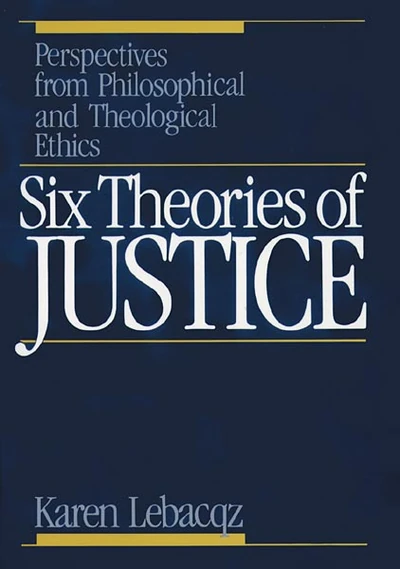
Six Theories of Justice
Perspectives from Philosophical and Theological Ethics
- Ethics, Culture & Social Issues
- Publisher: Augsburg Books (Augsburg Fortress)
- Published: 1987
FritzSearch.com earns a commission on purchases made through Bookshop.org links.
Publisher's Description
There may be no more urgent cry today than that of "justice" -- and no more frequent accusation than that of "injustice." But what is meant when these terms are used? Six Theories of Justice clarifies that question and offers major alternative answers. Dr. Lebacqz surveys three philosophical approaches to justice: John Stuart Mill's utilitarianism, the "contract" system of John Rawls, and the "entitlement" views of Robert Nozick. These are followed by analysis of three theological approaches: that of the National Conference of Catholic Bishops, of Reinhold Niebuhr, and of the liberation theologian Jose Porfirio Miranda. A comparison of the effectiveness of each approach in providing direction for facing and dealing with contemporary issues and situations adds to the usefulness of this volume. A lucid and well-structured introduction to recent thinking in social ethics.
Endorsements (4)
“and Theological Ethics, Karen Lebacqz and Matthew Gaudet offer an accessible and pragmatic introduction to eight ethical frameworks that influence contemporary moral decision-making. This revision updates chapters devoted to well-known theories and, with chapters on communitarianism and womanist theology, widens the scope to welcome modern voices to the discussion. Lebacqz and Gaudet frame justice as a pragmatic dialogue, and this text invites readers to delve into the push and pull of the exchange of ideas. More than ever, justice is the essential dialogue for our time. Lebacqz and Gaudet have accomplished something rare—they have taken a favorite classic and have made it indispensable to the ongoing conversation.”
“Gaudet have so astutely curated and interrogated them. While these eight must not be the only ones you engage in our wider, globally informed theoretical contexts, this text contributes a stimulating primer for such critical ethical discernment.”
“Karen Lebacqz and Matthew Gaudet have enriched this already wonderful book on theories of justice. Lyrically written and carefully considered, it has inspired decades of students in my seminars and remains one of the definitive and classic texts for the study of ethics.”
“Eight Theories of Justice is exactly what students of philosophy and ethics need—lucid, cogent explorations of the most fundamental ways people understand and debate notions of justice. Lebacqz and Gaudet offer a highly teachable, clear, and engaging discussion of contrasting conceptions of justice, highlighting what some share and where they diverge. An essential resource for philosophers and ethicists alike. I continue to learn from Karen Lebacqz, and now Matthew Gaudet, as this work refreshes and updates a classic text and makes it incredibly relevant and useful in the present day.”
See something wrong on this page? Report a problem