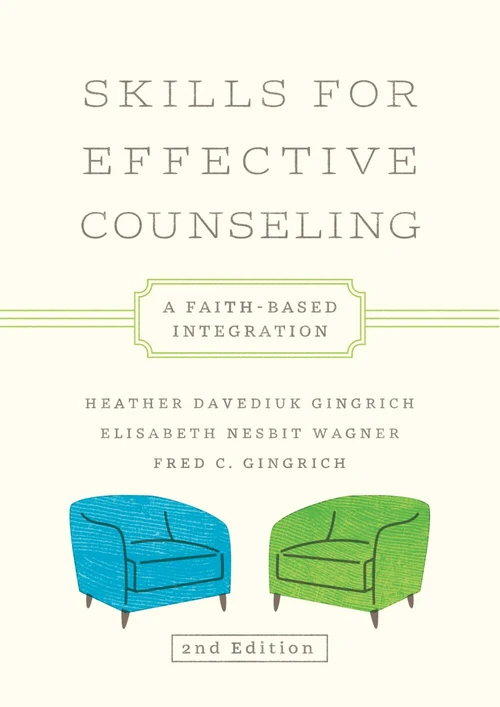
Skills for Effective Counseling
A Faith-Based Integration
- Counseling, Grief & Mental Health
- Publisher: IVP Academic (InterVarsity Press)
- Published: 2026
FritzSearch.com earns a commission on purchases made through Bookshop.org links.
Publisher's Description
Master Effective Listening and Foundational Intervention for Counseling and Beyond Anyone in a helping profession—including professional counselors, spiritual directors, pastoral counselors, chaplains, and lay leaders—needsto develop effective communication skills. But learning these skills is like learning a new language: it takes time and practice to communicate effectively, and lack of practice can lead to declining fluency in this new language. For both beginning students and seasoned practitioners, Skills for Effective Counseling provides a biblically integrated approach to foundational counseling skills. It trains the reader to use crucial microskills such as perceiving, attending, empathicconnection, and authenticity. Chapters include textbook features such as sample session dialogues, role plays, and a variety of exercises that will engage different learning styles. Interwoven throughout are special topics related to: clinical tips for using skills in real-world counseling settings biblical/theological applications current and seminal research on microskills multicultural counseling the relevance of skills to interpersonal relationships and broader ministry settings This textbook and the accompanying IVP Instructor Resources include all of the activities and assignments that an instructor might need to execute a graduate, undergraduate, or lay course in foundational counseling skills. Professors teaching in CACREP-accredited professional counseling programs will be able to connect specific material in the textbook to the latest CACREP Standards. This revised edition of Skills for Effective Counseling has been updated throughout to incorporate recent research and be even more useful for the classroom. This second edition includes a new chapter on video/online counseling, discussion of new approaches to biblical and theological integration, updated references, and expanded instructor resources. About the Series Christian Association for Psychological Studies (CAPS) Books explore how Christianity relates to mental health and behavioral sciences including psychology, counseling, social work, and marriage and family therapy in order to equip Christian clinicians to support the well-being of their clients.
Endorsements (4)
“A quality training guide, offering in-depth counseling skills development from a Christian integration worldview. A must-read for the helping professions.”
“The second edition of this very helpful and much-needed book for the effective training of Christian professional and lay counselors is now even better, including e-counseling. Highly recommended!”
“Since its first publication, this textbook has been an invaluable companion in my work with both undergraduate and postgraduate seminary students in Sri Lanka. It is a practical and accessible resource for both instructors and students, which resonates well across cultures. Its updates—like e-counseling tools and refined rating scales—boost its relevance and impact. An essential resource for developing compassionate and skilled Christian counselors with a foundation of faith-based integration.”
“As a professional therapist and educator, I find coming across this wonderful text—a superb resource for a wide audience—a distinct pleasure. This is a gem that reaches across audiences, from students to educators, lay counselors to professional counselors, and new clinicians to seasoned clinicians, and is therefore a rare find. The authors have put together a text that is both clinically and scripturally based. I appreciate its focus on relationship and empathy as a foundation for exploring counseling skills. This is a resource that is both readable and thorough and should be on the shelves of educators, students, and clinicians.”
See something wrong on this page? Report a problem