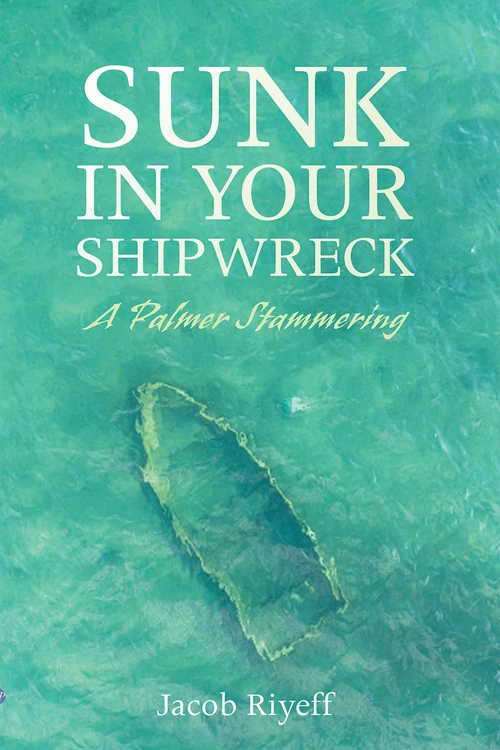
Sunk in Your Shipwreck
A Palmer Stammering
- Arts & Literature
- Publisher: Resource Publications (Wipf and Stock)
- Published: 2018
FritzSearch.com earns a commission on purchases made through Bookshop.org links.
Publisher's Description
Sunk in Your Shipwreck is a collection of poems that employs the trope of the pilgrimage to structure its meanderings, especially (in murky and unfaithful ways) echoing the great medieval English poem, Piers Plowman. Moving through a poem from beginning to end is itself a kind of pilgrimage in the mind and on the tongue. The poems here reflect a late modern palmering, a movement from place to place and time to time and back again, movement through language and silence, inner and outer states, contemplative and active, starting and stopping, a longing for a constant or a destination in a life of uncertain circumstances and goals. In this verse peregrination, the palmer seeks out an illuminating and sustaining vision to form and transform common surroundings and moments of human life, a pursuit that is hopeful and darkly radiant by turns.
Endorsements (3)
“It’s as if an Old & Middle English scholar/poet, a Hindu priest, and Jack Kerouac had gathered together in a dark Milwaukee church some evening to talk about life, God, the lover’s neck. (You’ll need to take notes!) Jacob Riyeff ‘s Sunk in Your Shipwreck does not disappoint. These are fine poems. They weave about you as you proceed, delivering what delivers them.”
“With one foot in the world of Chaucer, one foot in Great Lakes America, and one extra foot in Vedantic India, this brew teases our palate with memory, moments of fragile beauty, rollicking travel, and fun. All this under the benign gaze of Piers Plowman, the Christ of the common man.”
“Jacob Riyeff’s incarnational poems savor the created world, in its scents, sounds, flavors. The very air in them smells of tea . . . Over and over, they pose the integrated paradoxes of time and eternity, body and soul, human and divine, life and death, all of which find their great expression in the Person of Christ: ‘A god, and can he die?/A dead man—can he live?’”
See something wrong on this page? Report a problem