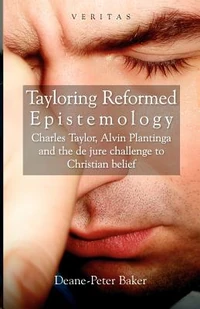
Tayloring Reformed Epistemology: Charles Taylor, Alvin Plantinga and the de jure Challenge to Christian Belief
Charles Taylor, Alvin Plantinga and the de jure Challenge to Christian Belief
- Philosophy
- Publisher: Westminster John Knox
- Published: 2008
FritzSearch.com earns a commission on purchases made through Bookshop.org links.
Publisher's Description
In recent philosophical discourse, there has been a proliferation of work in the field of philosophy of religion, and in particular at the intersection between epistemology and philosophy of religion. Much of that interest has centred on the emergence of what has come to be known as ‘Reformed Epistemology’. The central claim of Reformed epistemologists is that belief in God is properly basic. The purpose of the arguments offered by Reformed epistemologists is to oppose what Plantinga calls the ‘de jure’ objection to theistic belief – the idea that it is somehow irrational, a dereliction of epistemic duty, or in some other sense epistemically unacceptable, to believe in God. This objection is distinct from what Plantinga labels the ‘de facto’ objection – the objection that, whatever the rational status of belief in God, it is, in fact, a false belief. The primary goal of Reformed epistemology, then, is to defend Christian belief against the de jure objection, thereby showing that everything really depends on the truth o
Endorsements (2)
“In Tayloring Reformed Epistemology, Baker offers a carefully argued, nuanced epistemology of religious belief, linking the best reformed epistemology with Charles Taylor's historical and phenomenological case for theism. This is a refreshing, original contribution to the literature on theism and naturalism, the relationship of theism and morality, and the philosophical assessment of religious belief. While Baker develops detailed, critical analyses of the current epistemological debates, he never loses sight of the big picture, thus providing an excellent resource for those looking for a reliable introduction to the major recent arguments in the field.”
“[This] is an exemplary work of creative collaboration. Transgressing traditional divides between Continental and Analytic philosophy and Reformed and Catholic traditions, Baker places previously segregated schools of thought in conversation with one another, resulting in a remarkably original and compelling contribution to Christian philosophy.”
See something wrong on this page? Report a problem