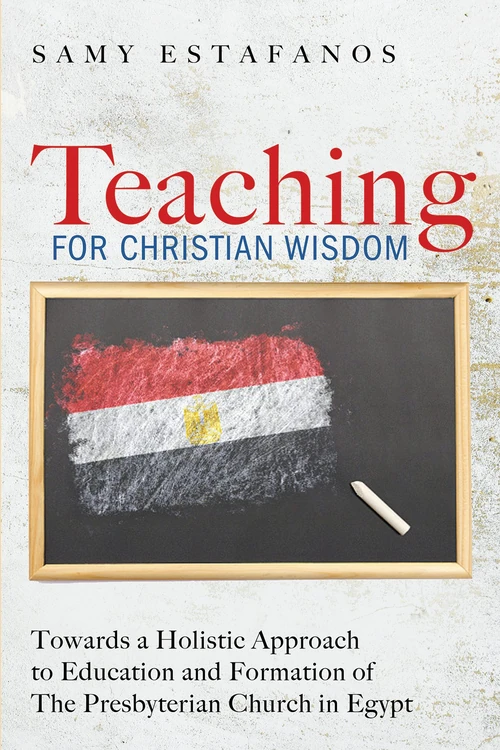
Teaching for Christian Wisdom
Towards a Holistic Approach to Education and Formation of The Presbyterian Church in Egypt
- Discipleship & Christian Education
- Publisher: Wipf and Stock
- Published: 2018
FritzSearch.com earns a commission on purchases made through Bookshop.org links.
Publisher's Description
In many ways, Christian education in the Presbyterian Church in Egypt was deeply influenced by public education in Egypt. One of the negative consequences of such influence is the significant lack of developing and using critical thinking as a basic element of the process. While multiple factors--educational and theological--contribute to forming it, this problem manifests itself in many ways. The present research deals with the lack of critical thinking as a central problematic reality of the Christian education process in the Presbyterian Church in Egypt. In order to illuminate and address this problematic situation, Richard Osmer's understanding of Christian education as practical theology is used to bring into dialogue American philosopher, psychologist, and educator John Dewey and reformer and theologian John Calvin. In light of this dialogue, not only the lack of critical thinking but also multiple other dimensions of the problematic situation of Christian education in the Presbyterian Church in Egypt are illuminated. Lack of democracy, lack of the use of experience, lack of creative pedagogies, lack of practical reason, and lack of theology from the process are some of these dimensions. Adapting Osmer's comprehensive approach to Christian education as practical theology, Samy Estafanos proposes a "holistic approach towards Christian education" that aims at transforming education into a reconciling process.
Endorsements (1)
“At a time when a critical and constructive Christian faith is increasingly hard to find and when the spirit of democracy is under siege around the world, Estefanos’s groundbreaking work offers a compelling vision for Christian education. This work meets the pressing need for an effective way to form Christians whose social engagement in the challenges of their context grows out of their transformation by the Word of God through the power of the Holy Spirit. This marvelous piece of work has the added advantage of demonstrating how to do practical theology in the mode of education set in the dynamic context of contemporary Egypt.”
See something wrong on this page? Report a problem