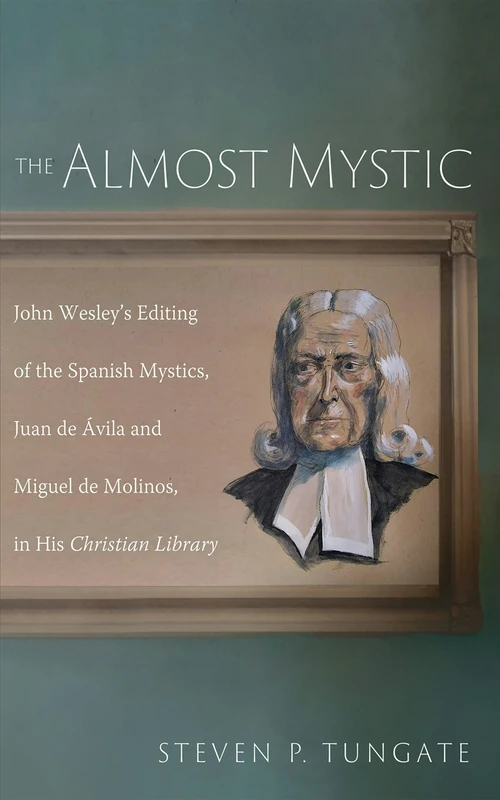
The Almost Mystic
John Wesley’s Editing of the Spanish Mystics, Juan de Ávila and Miguel de Molinos, in His Christian Library
- History & Biography
- Publisher: Pickwick Publications (Wipf and Stock)
- Published: 2024
FritzSearch.com earns a commission on purchases made through Bookshop.org links.
Publisher's Description
John Wesley, eighteenth century Church of England priest and founder of Methodism, was strongly influenced by the works of Roman Catholic mystics early in his ministry. These writings shaped his widely known doctrine of Christian perfection or entire sanctification. The mystics inspired Wesley to advocate for a lofty spiritual goal that he believed to be attainable in this life. In time, however, he developed many contentions with extremes as well as some particulars found in the mystical tradition. Beginning in 1749, Wesley began to publish his Christian Library--a fifty-volume compilation of abridged works that he believed to be among the best writings on practical divinity that had been published in English. Among this vast collection, he incorporated two works originally written in Spanish including a sampling of Letters by Juan de Avila and the Spiritual Guide by Miguel de Molinos. This book examines Wesley's editing of these works as a way of evaluating Wesley's theology in comparison and contrast with Spanish mysticism. In particular, this book serves as a comparative study among these authors on matters of theological authority, self-knowledge and epistemology, soteriology, spiritual growth, suffering and divine withdrawal, prayer, meditation, contemplation, and the spiritual goal.
Endorsements (5)
“Steven Tungate has produced a rich, comparative study that explores the similarities between the theologies of John Wesley and the mystics Juan de Avila and Miguel de Molinos. What emerges from such an engaging work is a bold invitation to recognize in a fresh way the undoubted influence of mysticism on Wesley’s theology especially at its lowest depths as well as at its highest reaches. Kudos to Tungate!”
“In The Almost Mystic, Steven P. Tungate offers an expert overview of many key aspects of John Wesley’s theology such as theological authority, epistemology, soteriology, prayer, spiritual growth, and suffering. He also brings fresh insight and energy to the crucial and neglected study of John Wesley’s work as an editor in this detailed and careful analysis of the work of Juan de Ávila and Miguel de Molinos in his Christian Library. Highly recommended!”
“Here is a very useful and thorough analysis of key Roman Catholic mystic sources that John Wesley used in his understanding and articulation of the perfecting work of God’s Spirit in Christian experience. Attentive readers will learn much not only about Wesley, but also about Spanish Christian mystics who form an important part of the Christian tradition. The book also helps readers grasp the nature and significance of Wesley’s Christian Library—the fifty-volume resource Wesley published to help serious Christians in their life and witness.”
“The vast Christian Library, assembled, edited, and promoted by John Wesley has been generally ignored by his spiritual descendants. Now, Steven Tungate makes important contributions to Wesley and English literary studies by undertaking this analysis. His work is significant for its methodological approach as well as its findings. It will be a standard work for understanding Wesley’s approach to theology and mysticism and as a case study on reading and editing of literature in eighteenth-century England.”
“By closely examining John Wesley’s nuanced relationship to the Spanish Catholic mystical tradition, Steven Tungate sheds new light on Wesley’s theology of suffering and Christian perfection. A work of refreshing scholarship, The Almost Mystic invites readers to reflect on a most fascinating subject—mystical union with God!”
See something wrong on this page? Report a problem