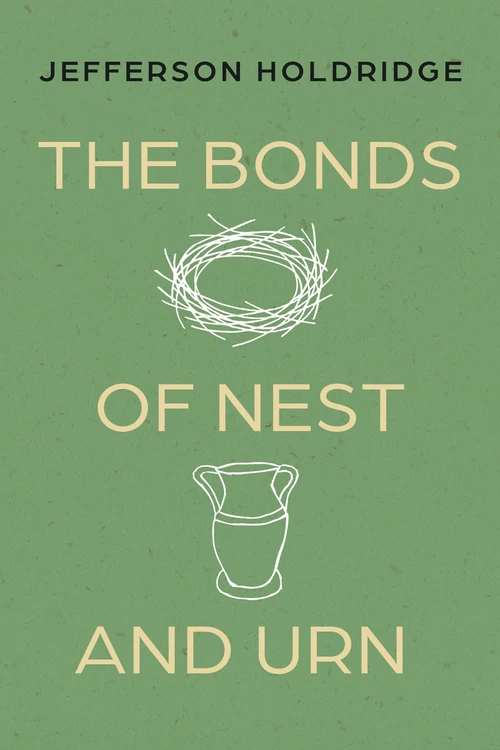
The Bonds of Nest and Urn
Poems
- Arts & Literature
- Publisher: Resource Publications (Wipf and Stock)
- Published: 2025
FritzSearch.com earns a commission on purchases made through Bookshop.org links.
Publisher's Description
The Bonds of Nest and Urn examines the forms and purposes of nature and art, revealing how the artist's vision--sometimes Orphic, sometimes Christian--ultimately unites the two. The spirit moves through number and metaphor, and the volume asks whether poetry can exist apart from history or personality, even though both inevitably remain present. The narrative arc of the poems flows from art to nature, though the two remain deeply intertwined. Many pieces focus on flora and fauna, with birds serving as muses and trees imagined both as objects of artistic perspective and as towering emblems of nature, commanding respect and, at times, fear. Stones are regarded as objects of art, reverence, and scientific inquiry, while the poems draw connections among the four classical elements--fire, air, water, and earth. The volume's richly layered personal and cultural perspectives, informed by the poet's American upbringing and years in Ireland and Italy, offer a nuanced exploration of how nature and culture shape human experience. Readers who appreciate poetry with a vivid sense of place will find much to savor.
Endorsements (2)
“In The Bonds of Nest and Urn, Jefferson Holdridge maps an ecotone where memory and the close observation of nature are entangled. In this passionate and rewarding collection he is drawn again and again to the mysteries of succession, in which birdsong becomes a portal and redemption is always on the run.”
“Jefferson Holdridge’s The Bonds of Nest and Urn develops a profound dialectic between art and nature in a straightforward language of stunning sophistication without a trace of pretense or affectation. It takes us deeper and deeper into nature as it almost seems to disappear, as ‘we silently make known our presence’ until finally ‘the naked eye no longer sees.’”
See something wrong on this page? Report a problem