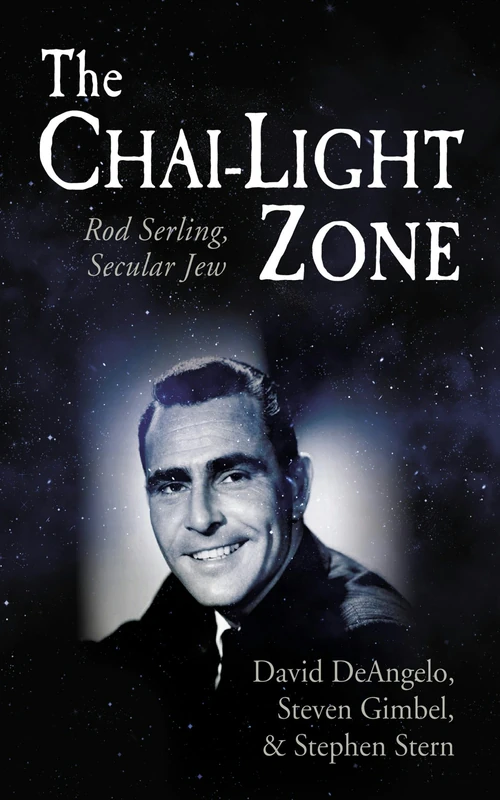
The Chai-Light Zone
Rod Serling, Secular Jew
- Arts & Literature
- World Religions
- Publisher: Cascade Books (Wipf and Stock)
- Published: 2024
FritzSearch.com earns a commission on purchases made through Bookshop.org links.
Publisher's Description
The Twilight Zone is remembered as a science fiction television series that reflected the uneasiness of Cold War America. Its creator, Rod Serling, was a secular Jew who fought in World War II and returned stateside to see moral problems at home, like racism and the potential for technology to rob us of our humanity. The Twilight Zone was Serling's attempt to influence mainstream culture in an ethically positive direction. His moral compass, which shaped his writing on the series, is entangled with his brand of cultural Judaism. By examining a range of episodes, the authors of this volume bring this Jewish moral influence out from the twilight and into the full light of day.
Endorsements (4)
“You are traveling through a Jewish dimension, a dimension as vast as space and as timeless as the Torah, where schlemiels conquer Nazis and Martians debate rabbis. It is the middle ground between science and mishegas, between bupkes and imagination. At the signpost up ahead, your next stop, The Chai-Light Zone.”
“This book enters another dimension, a scholarly dimension of the mind and philosophy. It is, as Rod Serling would have it, a journey into a wondrous land of imagination.”
“I love this book! Most notably how the authors frame Twilight Zone episodes as prophetic political episodes, prophetic midrashim, fighting fascist forces against democracy. It is timely and educational, while recognizing Rod Serling as an authentic American Jewish hero.”
“The Chai-Light Zone offers a new approach to the intertwined histories of American Judaism, the Cold War, and television. By centering their analysis on Rod Serling’s Jewishness, the authors propose new readings of several key episodes of the series. Although Serling’s Jewishness has been seen by many as vestigial, the authors offer several arguments for it being, in actuality, central to an understanding of Serling’s screenplays.”
See something wrong on this page? Report a problem