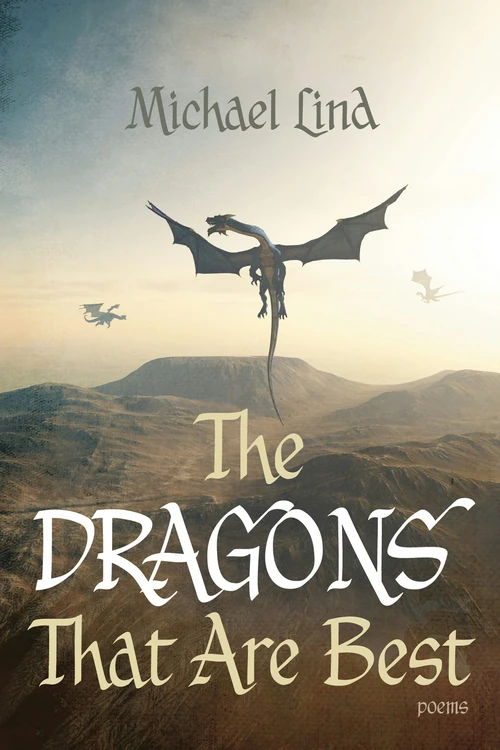
The Dragons That Are Best
Poems
- Arts & Literature
- Publisher: Resource Publications (Wipf and Stock)
- Published: 2025
FritzSearch.com earns a commission on purchases made through Bookshop.org links.
Publisher's Description
The second collection of poems by the best-selling Texan journalist, historian, and poet Michael Lind employs a striking variety of metrical forms to deal with an unusually broad range of subjects. The Dragons That Are Best includes the libretto of a song cycle based on a Mexican legend for the famous soprano Marni Nixon and a verse satire about Bill and Hillary Clinton that appeared in Esquire, glimpses of working-class challenges and historical cameos, and a Southwestern bestiary and allegorical lyrics, including the title poem, that deal with aging and social tolerance and attitudes toward life.
Endorsements (3)
“These remarkable poems are nothing short of Lyrical Ballads for our times. With consummate formal skill and humor, Michael Lind eschews neither musicality nor direct meaning to express plangent, serious, and subtle insights about our current everyday, the faraway past, and inter-continental disturbances.”
“What a joy it is to open this little volume of verse and find a moral vision and acute observation of people and things recorded in rhyme and stanza so fine and crafted. Lind is master of the pentameter line and the tetrameter line, the villanelle and dramatic monologue. Deep poetic knowledge lies behind the simplest couplets. The tragic sense is here—old age, lost love, frustration, disappointment—but no sentimentality or self-indulgence, no false emotion. Some of these poems are going to last, they’ll be in anthologies, though best appreciated in their placement here, where the full impact builds page by page and leaves you sobered and wiser once you reach the final line, which is ‘What have I become?’”
“Michael Lind’s poetry is as ambitious in its range of subjects, genres, verse forms, and meters as it is unpretentious in its manner. Poets reading this new book will be inspired (and maybe a bit jealous). The common reader, who seems to have largely abandoned (or been abandoned by) modern poetry, will simply be delighted.”
See something wrong on this page? Report a problem