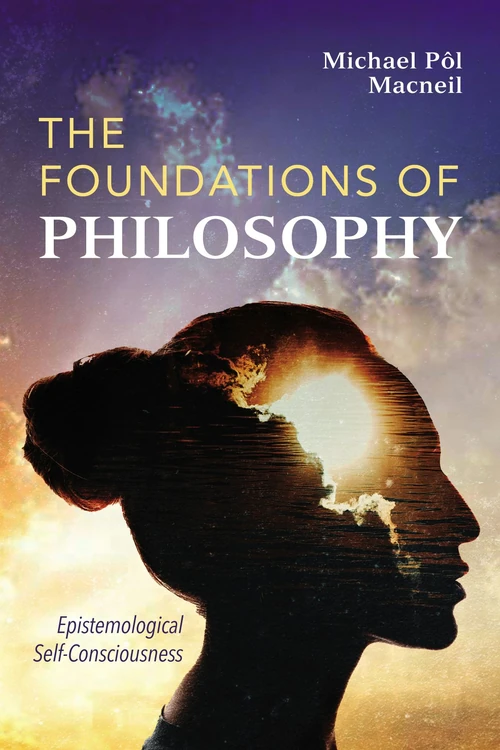
The Foundations of Philosophy
Epistemological Self-Consciousness
- Philosophy
- Publisher: Pickwick Publications (Wipf and Stock)
- Published: 2025
FritzSearch.com earns a commission on purchases made through Bookshop.org links.
Publisher's Description
This work is about philosophy and what makes a philosophy distinctively Christian in character, arguing that it is indeed possible for philosophy to be conceived of as first Christian and not just philosophy done by people that happen to be Christians. Christian philosophy is epistemologically self-conscious philosophy conducted in a manner honoring to the revelation of the Hebrew and Christian scriptures. It is argued that philosophy should be transformative rather than just therapeutic or elucidatory. The author examines competing philosophical and scientific accounts from both the empiricist and rationalist schools, arguing they are coherent and successful only to the degree that they have imported, consciously or unconsciously, Christian transcendentals. He then applies this insight to explore the character and practice of a Christian political philosophy.
Endorsements (2)
“Macneil emphasizes the role of transcendentals in philosophy, highlighting the hermeneutical interdependence of epistemology, metaphysics, and ethics. He critiques the cultural confidence in science and the secular state, arguing that it overlooks deeper metaphysical and ethical considerations. In contrast, he presents the Christian worldview as the comprehensive disposition that provides the necessary conditions for coherent, rational discourse. I highly recommend this book for those critically examining contemporary worldviews and the relationship between science, ethics, and metaphysics.”
“‘What indeed has Athens to do with Jerusalem?’ Tertullian’s question still remains pertinent, and this book makes a forceful and sustained case for a Christian philosophy founded on Scripture rather than the ‘unaided’ reason of Athens. While making this case, Macneil’s argumentation is at once engaged and systematic. The reader may find themselves in disagreement—either marginally or profoundly—in the course of the book but equally is being continually addressed in a reasoned discourse drawing from the best traditions of Christian thought. This self-confessedly ‘apologetic’ work in the Augustinian tradition is an important contribution not alone to the philosophy of religion, but also to metaphysics and meta-philosophy.”
See something wrong on this page? Report a problem