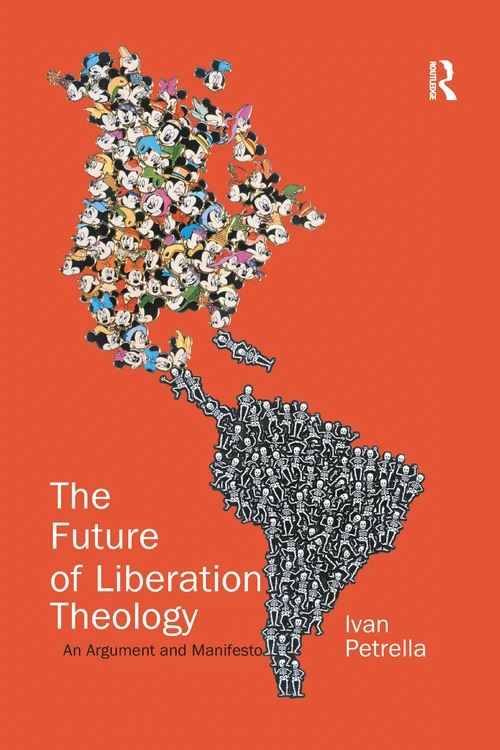
The Future of Liberation Theology
An Argument and Manifesto
- Publisher: Routledge
- Published: 2021
FritzSearch.com earns a commission on purchases made through Bookshop.org links.
Publisher's Description
The Future of Liberation Theology envisions a radical new direction for Latin American liberation theology. One of a new generation of Latin American theologians, Ivan Petrella shows that despite the current dominance of 'end of history' ideology, liberation theologians need not abandon their belief that the theological rereading of Christianity must be linked to the development of 'historical projects' - models of political and economic organization that would replace an unjust status quo. In the absence of historical projects, liberation theology currently finds itself unable to move beyond merely talking about liberation toward actually enacting it in society. Providing a bold new interpretation of the current state and potential future of liberation theology, Ivan Petrella brings together original research on the movement, with developments in political theory, critical legal theory and political economy to reconstruct liberation theology's understanding of theology, democracy and capitalism. The result is the recovery of historical projects, thus allowing liberation theologians to once again place the reality of liberation, and not just the promise, at the forefront of their task.
Endorsements (2)
“The work enjoys, in my view, three very important qualities. First, it is the first work of its kind, one that many of us have been waiting for: a synthesis of the changes undergone by liberation theology (LT) since the fall of the Berlin Wall. I have no doubt that on this strength alone the book will be well-ordered for course syllabi. Second, the analysis is substantial: the author is clearly on the right track when he argues that since the fall of socialism LT has been struggling to locate a new historical project. And third, the book is persuasive: elegant, clear, without a trace of jargon. The author is clearly seeking to communicate effectively with his audience. On these counts, I am delighted to see this book come into print.”
“While this is not the first or even the last word on liberation theology, it is well worth reading and deserves to be widely read, as, unerringly, its author manages to comprehend, sympathize with, and analyse the predicament of liberation theology since the fall of the Berlin wall... This original book, so sympathetic to liberation theology and its goals, deserves a wide readership...”
See something wrong on this page? Report a problem