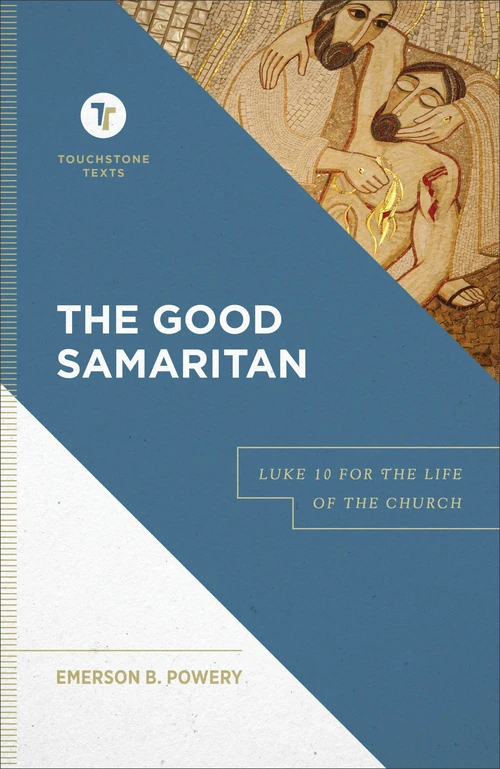
The Good Samaritan
- Biblical Studies & Commentaries
- Publisher: Baker Academic (Baker Publishing Group)
- Published: 2022
FritzSearch.com earns a commission on purchases made through Bookshop.org links.
Publisher's Description
The story of the good Samaritan in Luke 10 is one of Jesus's most well-known parables. It continues to fascinate readers with its powerful imagery and ethical significance. In this exposition, New Testament scholar Emerson Powery shows how this classic and beloved text can speak afresh to the life of the church today. Powery explains that in every generation, followers of Jesus need to be reminded that mercy is a natural consequence of faith. Jesus's parable of the good Samaritan emphasizes this point in a dramatic way by placing an "enemy" as the central hero of the story. Powery explores diverse interpretations of the good Samaritan, carefully investigates this parable within the theology of the Gospel of Luke, and connects the parable to contemporary events. The book encourages readers to think through the ethical implications of this story for their own contexts. The Touchstone Texts series addresses key Bible passages, making high-quality biblical scholarship accessible to the church. The series editor is Stephen B. Chapman, Duke Divinity School.
Endorsements (6)
“Drawing on voices as varied as Frederick Douglass, Toni Morrison, the Solentiname community, the Amish, the Black Lives Matter movement, and more, Emerson Powery reminds us that when engaging the parable of the good Samaritan, 'what you see depends on where you stand.' Placing before us the imperative to see where communities stand, Powery shows us how a fresh and embodied reading of the parable can animate an enlivened, ethical, and theologically grounded faith lived out in community. This book is astonishing in its range and compelling in its vision; I highly recommend it.”
“By subtitling this book 'Luke 10 for the Life of the Church,' Powery promises to offer his scholarship in a way that meaningfully and usefully speaks to the church, and The Good Samaritan delivers on this promise. Scholars, theologians, pastors, and Christian educators will find value for their ministries. The church is rich in its ecumenical and historical traditions and in its diverse cultures, races, and life experiences. These are critical instructive lenses that we must appreciate when interpreting the parable and, more broadly, the Scriptures. We are invited to appreciate time-honored traditions of interpretation but are also challenged to hear what the Spirit is saying to the church through the text in our time and experience. Powery gives fresh and challenging perspectives for interpreting and understanding this universally referenced parable. In doing so, he calls us to a deeper self-examination in our use of Jesus's larger parabolic teachings. Readers' intellectual interests will be ignited and the call to a faithful contemporary walk with Jesus made more compelling.”
“How do we read? How do we embody faith? Powery provides a provocative analysis of the parable of the good Samaritan that challenges believers to engage these questions. By exploring past interpretations of this parable that connect to present concerns in the world, Powery demonstrates how parables continue to surprise us, turn our expectations upside down, and call us to alter our imaginations. Powery urges us to grasp how reading the Bible is both a spiritual and a political practice, beckoning us to get involved in 'good trouble.'”
“Those who are seeking a simple explanation of the parable of the good Samaritan should instead be prepared to be stretched by Powery's analysis. He invites the reader and the contemporary church to experience the transformative power of the parable through the eyes of historical and contemporary interpreters, honoring their many lenses--including those of context, social location, race, ethnicity, religious identity, and politics. Powery is present in his work in a winsome and authentic way and models the best of biblical scholarship and pedagogy in theological education.”
“Weaving together an illuminating collection of interpretations of the well-known parable of the good Samaritan, this book poses important challenges to both our theological commitments and our interpretive lenses. Powery offers a sincere invitation for engaged conversations regarding forgiveness, reconciliation, and neighborliness.”
“As Powery tells the story, Jesus's parable of the good Samaritan is brimming with possibilities and challenges for reflection and action, especially regarding the way our theology shapes how we relate to people who are not like us. This is a timely, engaging, and provocative book--well suited to the classroom and the church--that demonstrates again and again how interpretation and ethics are tightly intertwined.”
See something wrong on this page? Report a problem