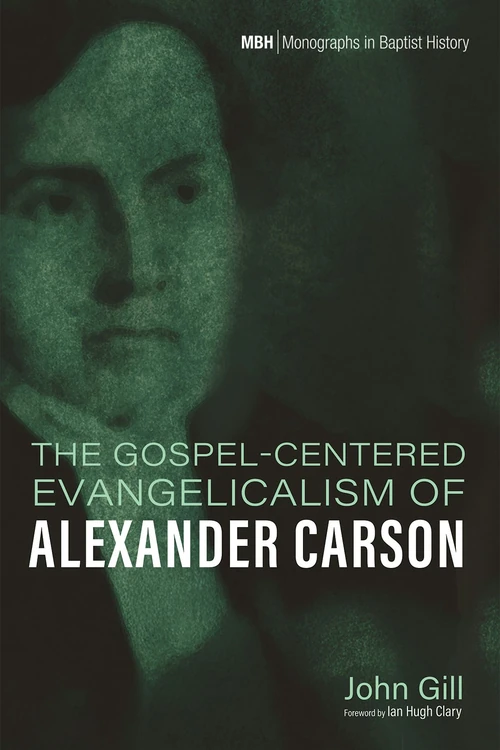
The Gospel-Centered Evangelicalism of Alexander Carson
- History & Biography
- Publisher: Pickwick Publications (Wipf and Stock)
- Published: 2025
FritzSearch.com earns a commission on purchases made through Bookshop.org links.
Publisher's Description
Alexander Carson (ca. 1776-1844) is primarily remembered by Baptist historians as an apologist for believer's baptism. Yet, this is a topic that Carson himself would consider secondary. What, then, did Carson consider to be of primary importance? The gospel of Jesus Christ as conveyed in the Scriptures. The thesis of this study is that Carson's belief in the Bible as a verbally and completely inspired text provided him with an infallible source for his understanding of the gospel as being centered upon the atonement, effective through justification by faith alone, and the motivation for evangelism. Carson's theology is examined in each area through a study of his pertinent works, the works written by those with whom he interacted, as well as the larger theological, social, economic, and political context surrounding those works.
Endorsements (3)
“A formidable theological voice during his lifetime, Alexander Carson is a largely forgotten figure today. While his biographical details are easily accessible, this is the first book length treatment of his theology. It serves not only as an introduction to Carson’s thought but also offers a window into the world of Irish and British Evangelicals in the early nineteenth century.”
“John Gill ably situates the life and writings of Alexander Carson within the confines of nineteenth-century evangelicalism, using David Bebbington’s standard quadrilateral as a guide. Evangelicals from all denominations will find in Carson a Baptist friend whose commitment to the spread of the gospel derived from his love of Christ and confidence in the Bible. This is a lucidly written and cogently argued work that will be an edifying resource for scholars and pastors alike.”
See something wrong on this page? Report a problem