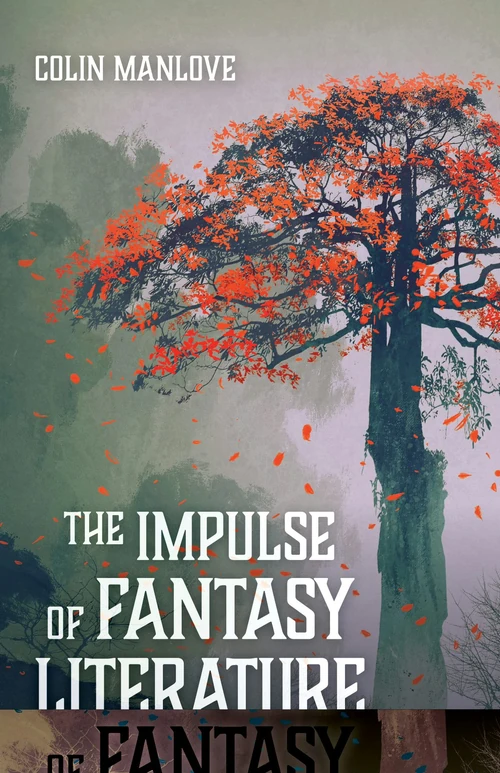
The Impulse of Fantasy Literature
- Arts & Literature
- Publisher: Resource Publications (Wipf and Stock)
- Published: 2020
FritzSearch.com earns a commission on purchases made through Bookshop.org links.
Publisher's Description
This book grew out of the author's wish to go beyond a formal definition of fantasy to discover a basic urge and interest common to the genre. He finds this urge to be the celebration of identity. Fantasy is ultimately concerned to heighten and praise being, whether that being is God's creation, the world, or the creations of the fantasy writer themselves. This interest can take the form of direct eulogy or of more unconscious fascination. It is seen in fantasy's conservatism and its frequently elegiac mode, and is demonstrated through its formal characteristics such as circular structure and the use of juxtaposition to heighten individuality. It is more overtly present in modern than in pre-1800 fantasy, partly because modern fantasy developed as a Romantic reaction against technology and everything that reduced direct contact between people and the environment. These aspects of fantasy are illustrated from detailed discussion of the tales of Grimm, Walter de la Mare's Told Again, W. M. Thackeray's The Rose and the Ring, Charles Williams's prose fantasies, Ursula le Guin's Earthsea trilogy, E. Nesbit's magic books, George MacDonald's Phantastes and Lilith, T. H. White's The Once and Future King, Mervyn Peake's Gormenghast novels, William Morris's late romances, Lord Dunsany's The King of Elfland's Daughter, E. R. Eddison's The Worm Ouroboros, and Peter Beagle's The Last Unicorn. Together these authors and works provide a cross-section of what is a fundamentally panegyric genre demonstrating its variety, its strengths, and its limitations.
Endorsements (3)
“This is not a survey of the field, but something more valuable to students, as there is little available in England on these writers set in the context of fantasy.”
“Manlove remains the first critic of fantasy to whom one should turn; in this volume he establishes himself as the best first source for comment on such writers as Charles Williams and E. Nesbit. What is best about Manlove is that, especially for a pioneering critic, he is tough and disciplined. . . . Manlove's biting intelligence is manifest throughout his book.”
“[Manlove's] comments always stimulate rejoinder, never boredom. . . . Manlove's work certainly advances our understanding of fantasy and supplies us with a new category of terms to use in describing it.”
See something wrong on this page? Report a problem