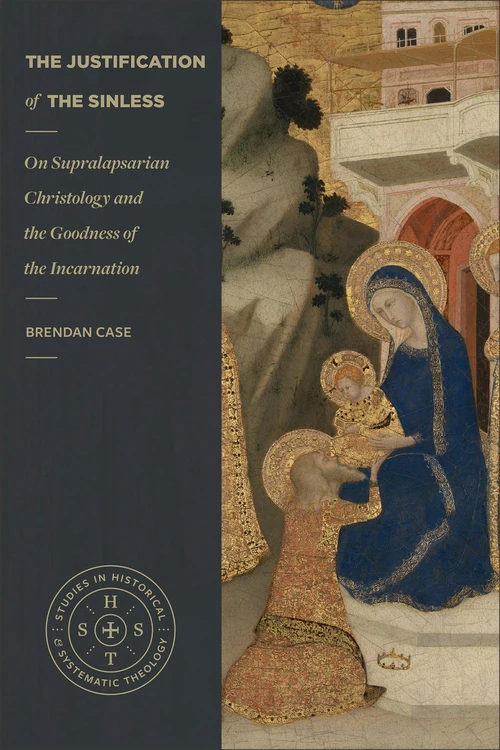
The Justification of the Sinless
- Theology
- Publisher: Baker Academic (Baker Publishing Group)
- Published: 2026
FritzSearch.com earns a commission on purchases made through Bookshop.org links.
Publisher's Description
Did God decide to save before he decided to create? Though this question is often considered abstract, its answer informs both the purpose and the nature of the incarnation. In The Justification of the Sinless, Brendan Case argues that God the Son would have become incarnate even if humanity had never sinned. The incarnation benefits creation in many ways besides redemption. Indeed, it is the ultimate reason for the creation of the cosmos itself. Case develops his argument primarily by drawing on the work of Robert Grosseteste (ca. 1168-1253). Though neglected today, this brilliant medieval theologian drove the thirteenth-century debates over the incarnation. Building on Grosseteste, Case provides a compelling set of exegetical and theological arguments for the supralapsarian thesis. If the incarnation is logically prior to the fall, then God always planned to endow creation with a glory beyond estimation.
Endorsements (2)
“The Justification of the Sinless is a creative, rousing, contemporary defense of Robert Grosseteste's supralapsarian Christology. Brendan Case shows his characteristic ingenuity and textual dexterity in bringing to the present Grosseteste's thirteenth-century arguments. This book, both in substance and in spirit, duly honors the dynamic and creative thought of Grosseteste.”
“Once situated at the margins of theological discourse, supralapsarian Christology is enjoying a remarkable renaissance. Brendan Case's The Justification of the Sinless is a truly excellent contribution to this conversation, excavating six arguments of one of its medieval pioneers, Robert Grosseteste, placing them in historical context, and making a strong case for their ongoing validity. By making Grosseteste a conversation partner for contemporary theologians, Case offers a rich vision of a creation prepared for the arrival of God in the flesh.”
See something wrong on this page? Report a problem