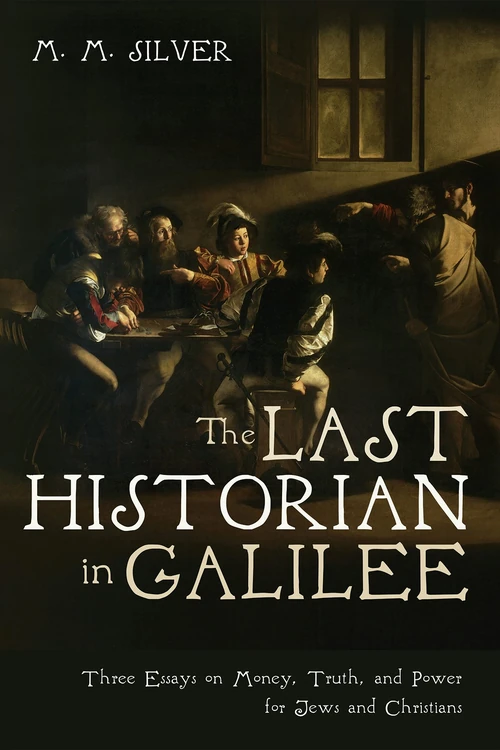
The Last Historian in Galilee
Three Essays on Money, Truth, and Power for Jews and Christians
- Publisher: Wipf and Stock
- Published: 2025
FritzSearch.com earns a commission on purchases made through Bookshop.org links.
Publisher's Description
What do the history and cultures of Judaism and Christianity have to say about the most urgent and complicated problems and crises of our times? Is it a logical outcome of relations between these faiths that Israel is increasingly accused of colonialism or genocide and also vociferously defended against these charges, by Christians and Jews in America and elsewhere? Is the widespread sense that "truth" in politics and public life has become an endangered species also a logical outcome of how Jewish and Christian relations and affairs have evolved since the period of Jesus and the Second Temple through to the start of the twentieth century and up to today? And what about these religions, and their histories, and the glaringly unequal distribution of wealth in democracies today? The three essays in The Last Historian in Galilee examine the three broad issues laden within such questions--money, truth, and power. Branching out from the Galilee region of Jesus' youth, where fracture between the two religions first erupted, these readable, lively essays survey how the two religions have related to these topics for two thousand years. They end with a no-holds-barred discussion of the three topics' contemporary expressions, as in debates about Zionist colonialism.
Endorsements (1)
“M. M. Silver is ‘the last historian in Galilee,’ and from there he offers us an intriguing perspective on the relations and contrasts between the Jewish and Christian religions, which have contributed to shaping the views and challenges of our times. Silver shows how our perceptions of money, truth, and power were formed in ancient times and reinterpreted more recently. Through a historical approach, he interrogates and questions central aspects of the present war in the Middle East and of the ongoing crisis of democracy in the United States and Europe.”
See something wrong on this page? Report a problem