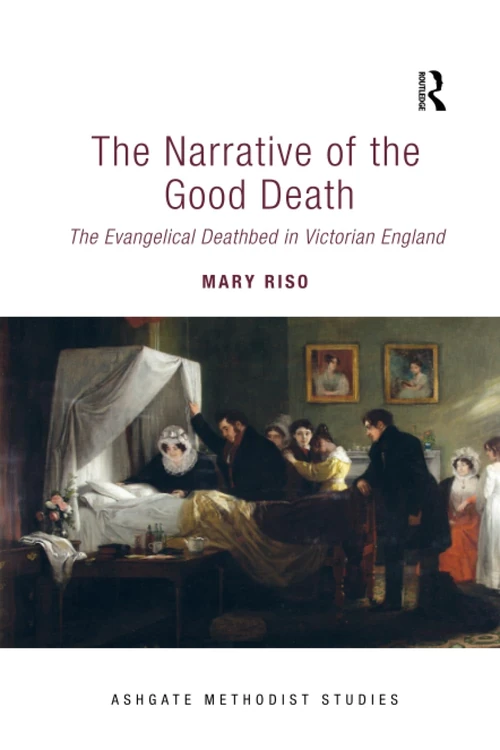
The Narrative of the Good Death
The Evangelical Deathbed in Victorian England
- History & Biography
- Publisher: Routledge
- Published: 2017
FritzSearch.com earns a commission on purchases made through Bookshop.org links.
Publisher's Description
The Christian idea of a good death had its roots in the Middle Ages with ars moriendi, featuring reliance on Jesus as Savior, preparedness for the life to come and for any spiritual battle that might ensue when on the threshold of death, and death not taking place in isolation. Evangelicalism introduced new features to the good death, with its focus on conversion, sanctification and an intimate relationship with Jesus. Scholarship focused on mid-nineteenth-century evangelical Nonconformist beliefs about death and the afterlife is sparse. This book fills the gap, contributing an understanding not only of death but of the history of Methodist and evangelical Nonconformist piety, theology, social background and literary expression in mid-nineteenth-century England. A good death was as central to Methodism as conversion and holiness. Analyzing over 1,200 obituaries, Riso reveals that while the last words of the dying pointed to a timeless experience of hope in the life to come, the obituaries reflect changing attitudes towards death and the afterlife among nineteenth-century evangelical Nonconformist observers who looked increasingly to earthly existence for the fulfillment of hopes. Exploring tensions in Nonconformist allegiance to both worldly and spiritual matters, this book offers an invaluable contribution to death studies, Methodism, and Evangelical theology.
Endorsements (2)
“Evangelical Nonconformists of the Victorian age recorded the deaths of many of their number in the monthly issues of their denominational magazines. Mary Riso has analysed these obituaries with penetration, showing sensitivity to their conventional ways of writing about deathbeds and an awareness of the changing cultural setting of attitudes to mortality. The result is a collective profile that lays bare the strongly felt priorities of these Christian groups when confronting the last enemy.”
“Mary Riso's carefully researched book makes a significant contribution to understanding the place of Protestant Nonconformity in English society. Her work is especially helpful for showing how much Nonconformist obituaries (a flourishing genre) partook of conventional middle-class values, yet also transcended them; how much the various denominations resembled each other, yet with crucial differences; and how much Romantic currents affected Nonconformists in some ways but not in others. It is a fine book.”
See something wrong on this page? Report a problem