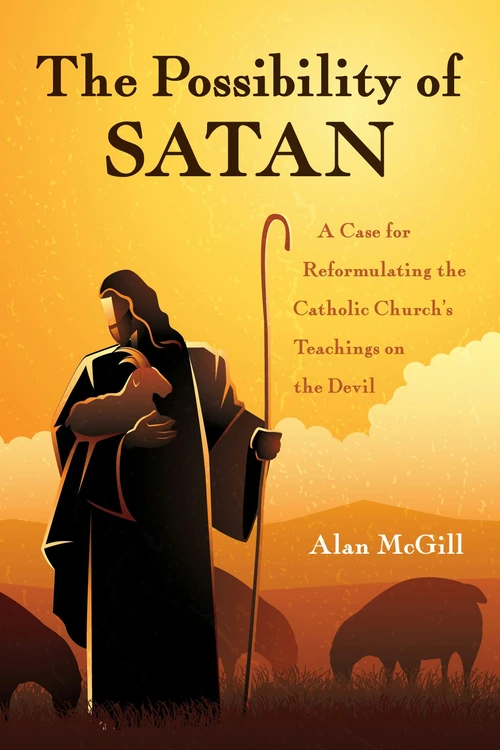
The Possibility of Satan
A Case for Reformulating the Catholic Church’s Teachings on the Devil
- Theology
- Publisher: Pickwick Publications (Wipf and Stock)
- Published: 2021
FritzSearch.com earns a commission on purchases made through Bookshop.org links.
Publisher's Description
Can we know that Satan exists as a particular, disembodied spirit? Current Catholic teaching insists that Satan exists as a person, a fallen angel who has instigated the Fall of humanity, continues to influence humans today, and constitutes a singular nemesis to God. How, one might ask, could human beings know such a thing with certainty? In response, this book seeks to rescue the mythical language in which the doctrine of Satan is rooted so that it is freed from the unreasonable expectation that it affirms the existence of a particular creature, and can instead express theological truth that is of relevance to all free-willed creatures. In doing so, it addresses thorny questions concerning the interpretation of Scripture, the relationship between God and evil, between doctrine and truth, between the Church and modernity, and between the condemnatory impulses apparent in Christian thought and the doctrine of an omnipresent God of infinite mercy. The book detects in the doctrine of Satan the expression of fundamental truths concerning the Creator-creature relationship--truths that are too easily obfuscated in current formulations that invite either fundamentalism or incredulity.
Endorsements (2)
“The Possibility of Satan is clear, well reasoned, interesting, and well researched. Both critical and constructive, it is a book I would happily recommend to anyone wanting a sense of modern theological discussions about Satan.”
“McGill’s research is innovative, exhaustive, solid, and sharply focused. He undertakes a study of the doctrine of Satan within Catholic thinking and delivers probably one of the few truly authoritative and thorough critical accounts available in Western scholarship. . . . McGill presents a new reading that will challenge both traditional and progressive thinkers alike. He has produced a constructive and creative engagement to offer a proposal for how we might interpret ‘personal’ evil today. A sophisticated, impressive, and well-argued account that will be an important addition to academic libraries and seminaries.”
See something wrong on this page? Report a problem